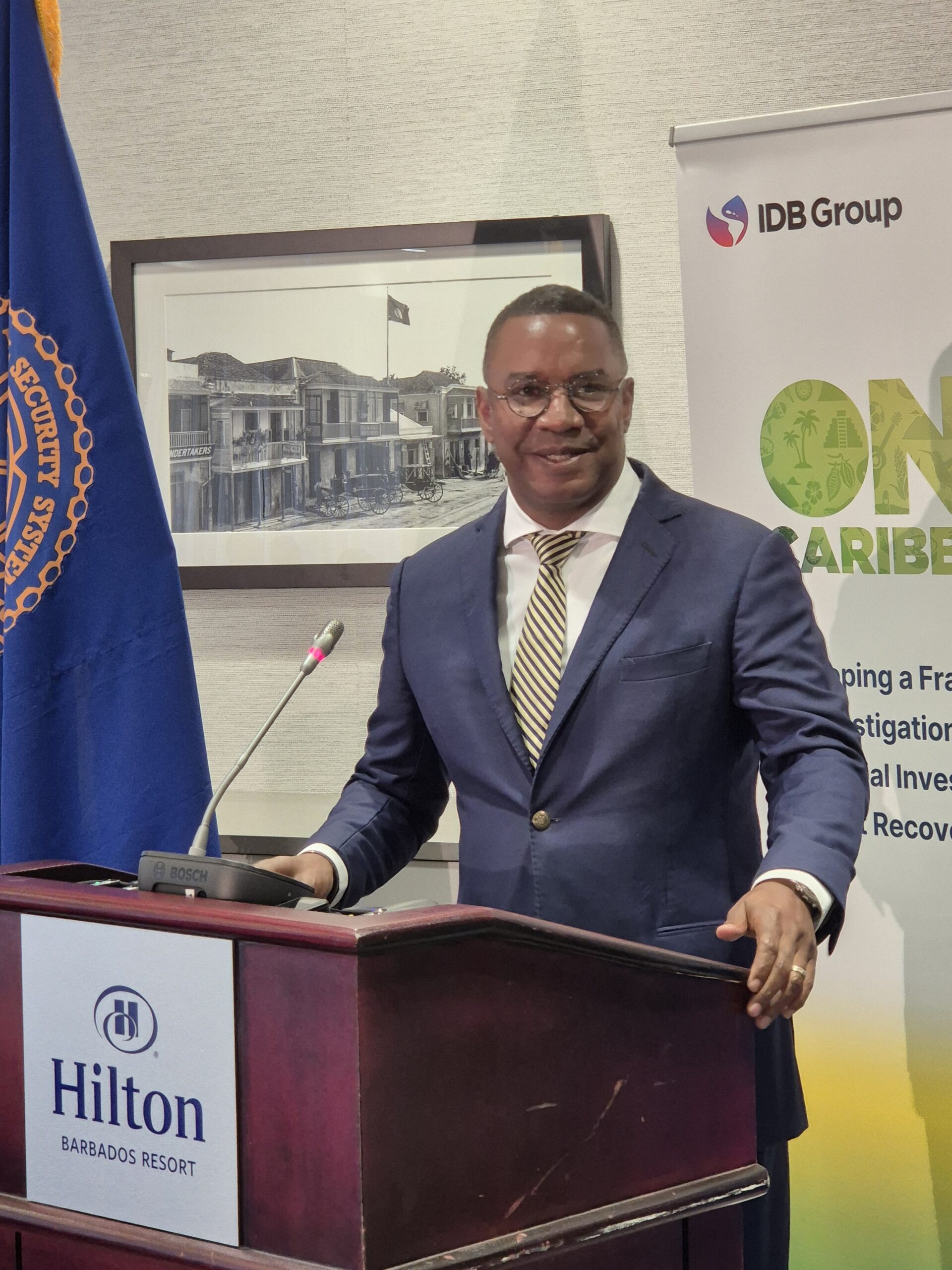
In a stark warning delivered at a landmark regional legal forum in Bridgetown, Barbados on Monday, Attorney General Wilfred Abrahams has exposed a critical vulnerability in the Caribbean’s fight against transnational organized crime: fragmented intelligence sharing that criminal networks are actively exploiting to operate across borders undetected. Addressing an audience of legal officials and security policymakers from across the region at the Hilton Barbados, where the gathering focused on advancing joint investigation teams for financial crime and asset recovery, Abrahams emphasized that Caribbean nations can no longer afford to work in isolated silos, while criminal organizations have already evolved into unified, region-wide enterprises.
“The only people who do not see the Caribbean as one single operating space are us, the policymakers,” Abrahams told attendees. “The criminals certainly do.”
To illustrate the dangerous gaps in current information-sharing protocols, Abrahams shared a shocking recent case from Barbados’ own law enforcement records. Authorities had intercepted a foreign national who had committed serious offenses in their home country before traveling to Barbados to continue criminal activity locally. After the individual was deported, they legally changed their name via a deed poll and re-entered Barbados – not once, but twice. It was only by chance that a third attempt was foiled, when an airport officer recognized the person’s face from a previous interaction.
“If you have a known dangerous criminal operating in your country with the free movement that exists across the Caribbean, that person becomes a danger to all of us,” Abrahams said. The same loopholes that allowed this repeated breach are now being exploited by entire transnational gangs and criminal networks across the region, he added.
Gang members can easily move between Caribbean islands on commercial flights, often avoiding detection because they have not yet been convicted or added to watchlists in their home countries, even when active investigations are already underway. Inadequate cross-border information sharing allows these individuals to commit violent and financial crimes in one jurisdiction, then return to their home base with clean records before local investigators can connect their activities to open cases elsewhere. Abrahams pointed out that this coordinated criminal mobility comes as Caribbean nations continue to grapple with rising gun violence, gang activity, and growing systemic risks from transnational organized criminal networks.
Abrahams stressed that regional crime-fighting strategies must evolve to match the increasingly integrated structure of modern criminal groups. “While we operate in silos, the criminals are building multinational associations,” he said. “We cannot win any war against crime without good information shared in a timely manner, whether at the local, regional, or international level.”
The Attorney General also acknowledged a persistent underlying barrier to cooperation: institutional and intergovernmental mistrust. He noted that in some cases, even different agencies within the same national department still withhold critical intelligence from one another, and that this cultural reluctance to share information must be overcome if the region is to get ahead of criminal networks.
To address these barriers, Abrahams highlighted the value of formal collaborative frameworks such as joint investigation teams, which bring together law enforcement and legal authorities from multiple jurisdictions to create structured, standardized channels for intelligence sharing and coordinated case work. The two-day forum, convened by the Regional Security System (RSS), the Inter-American Development Bank and GovRisk International, is specifically focused on developing a unified Caribbean legal framework to support these cross-border teams targeting financial crime and stolen asset recovery.
Abrahams closed by urging regional governments to move beyond exploratory policy discussions and commit to tangible, immediate action. “This can’t be just another talk shop,” he said. “The only path forward is to reach a point where we fully share relevant information where it counts. As children, we were all taught to share. As policymakers and adults responsible for public safety, we should live that lesson now.”