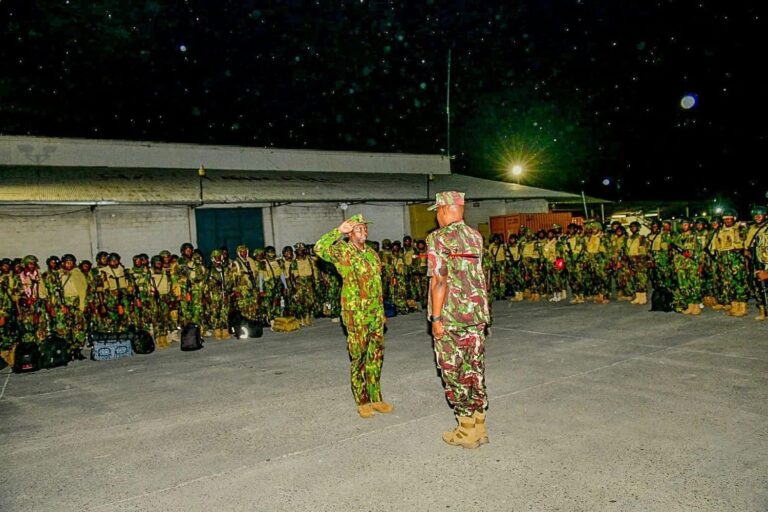
PORT-AU-PRINCE, Haiti — Haiti’s long-fragile security landscape is bracing for unprecedented uncertainty, as a 500-strong Kenyan police contingent that has led joint anti-gang operations across the Caribbean nation nears its full withdrawal, scheduled for completion by April 30, 2026.
The exit of the Kenyan officers, deployed under a multinational security framework starting in June 2024, has forced Haiti’s domestic law enforcement and military institutions into a frantic race to cover critical capability gaps left by the departing unit. During opening remarks at the 6th meeting of the country’s Sectoral Security Table (TSS), PNH Director General Vladimir Paraison acknowledged that Haiti’s national police force stands at a critical turning point.
Paraison warned that the Kenyan withdrawal has already eroded security gains secured through months of joint counter-gang operations, particularly in some of Haiti’s most violence-plagued regions: Croix-des-Bouquets, Delmas, and the heart of downtown Port-au-Prince. He described the departure as stripping Haiti’s police of a vital “second line of defense,” a loss that has shaken operational capacity across high-risk zones. Local leaders echo this concern: Port-au-Prince Mayor Massillon Jean noted that residents in volatile neighborhoods are already bracing for a return of brutal gang incursions without the deterrent presence of Kenyan security personnel.
The transition has been further complicated by repeated delays in the activation of Haiti’s planned domestic Gang Repression Force (FRG), a unit meant to take over sustained counter-gang responsibilities from the multinational contingent. Haitian authorities confirm that firm timelines for the full deployment of the FRG remain undetermined, even as the national government moves to rush additional armed forces personnel into frontline security roles.
Under the current interim plan, Haiti’s military is set to have roughly 400 personnel deployed to gang-held regions by the end of April. The army will be tasked with holding territory that has already been reclaimed from armed groups, while the national police leads direct frontline operations against gang strongholds. To boost long-term domestic military capacity, Defence Minister Mario Andrésol also announced a new recruitment drive that will train 1,200 new military recruits to expand the force’s operational reach.
The Kenyan withdrawal coincides with the launch of a new UN-backed multinational Gang Suppression Force (GSF), a mission approved by the United Nations Security Council in October 2025. This new deployment will be led by Chadian security forces, replacing Kenya’s leadership of the multinational counter-gang effort. Veteran UN peacekeeping official Jack Christofides, a South African with decades of experience overseeing peace operations across the African continent, has been appointed as the new special representative leading the mission. He succeeds Kenya’s Godfrey Otunge in the top leadership role. The first contingent of Chadian police officers already arrived in Haiti earlier this month to begin setting up the new mission.
Over the course of the Kenyan deployment, the contingent recorded notable progress in pushing back against gang expansion, but the mission also came at a cost: at least three Kenyan police officers were killed in the line of duty during counter-gang operations.