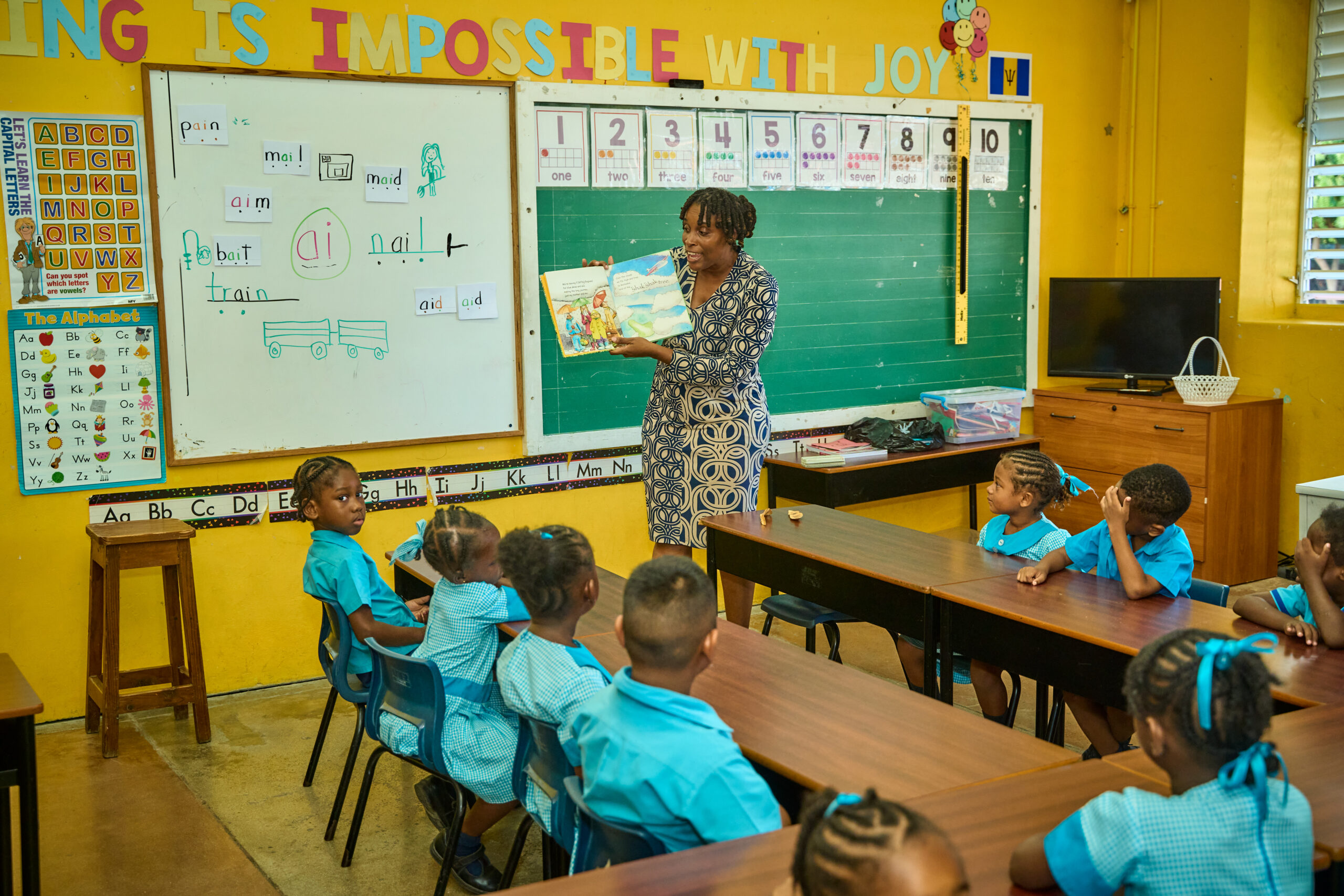
As communities across Barbados marked World Book Day this Thursday, a clear, urgent message took center stage at all public and school-hosted events: educational authorities cannot cultivate strong, confident readers without consistent support from parents. To mark the global celebration of books and reading, the Ministry of Education Transformation rolled out a full schedule of engagement activities, including interactive reading sessions for students across all early and primary campuses, and curated public displays at two of the island’s busiest shopping hubs, Sky Mall and Sheraton Centre. These showcases highlighted the range of ongoing national literacy initiatives and put student work on display for the general public. At the Sky Mall exhibit, organizers laid out the full scope of evidence-based tools now integrated into Barbadian classrooms, ranging from structured phonics-focused instruction to targeted reading comprehension strategies. Shamel Edwards, a peripatetic teacher with the Ministry of Education Transformation, used the event to directly appeal to caregivers across the island, emphasizing that in-school instruction can only go so far without home reinforcement. “Parents, parents, we need you. We need your support. The teachers can’t do it alone,” Edwards stressed. “We provide the learning environment and structured literacy instruction in school, but you are the key to building a lifelong love of reading at home. Read to your children, read alongside them, and give them space to read aloud to you.” Edwards added that World Book Day serves as a critical reminder that reading remains a foundational, relevant skill in modern life, pushing back against narratives that books are an outdated form of engagement. Current efforts center on reconnecting students to core literacy fundamentals while making reading a joyful, low-pressure activity, rather than just another academic task. Nursery and primary school students are taking part in daily read-aloud sessions, peer buddy reading programs, and curated book displays, with dedicated book clubs and cozy classroom reading corners used to spark organic interest in reading. “We’re not just reading to complete school work. We’re reading for pleasure,” Edwards explained. The day’s public outreach is part of a far broader national literacy push launched in September 2024, which targets literacy skill-building from as early as age three, through to the end of primary school at age 11. Janelle Little, Education Officer and National Literacy Lead, outlined that the strategy prioritizes structured, age-appropriate literacy instruction from a student’s first day in the education system. Ministry outreach teams have already completed visits to roughly 35 primary and early childhood institutions across the island, where they lead group reading sessions and track student progress. “Initial assessments revealed that the students have been responding positively to the new programming… we have already recorded some incremental growth in core reading skills,” Little shared. She added that the new initiative also introduces updated screening tools that allow educators to flag common learning challenges such as dyslexia far earlier, leading to faster targeted support. As part of her World Book Day activities, Little visited St Lawrence Primary School, where she read *In the Land of the Shak Shak Tree*, a local children’s story by Barbadian author Jade Small. The title was selected by ministry staff as part of a deliberate push to center local and Caribbean children’s literature in classroom programming. Lorraine Gittens, principal of St Lawrence Primary, said the impact of the new national literacy programs is already tangible on her campus. “We have seen a significant increase in the reading capacity and capabilities of our students,” Gittens said, crediting evidence-based approaches such as Jolly Phonics for the improvement. Echoing the central appeal of this year’s World Book Day events, Gittens emphasized that sustained progress relies on intentional partnership between schools and homes. “It is a balance… what we do here in school must be supplemented at home as well,” she said. “We are working hard to build stronger links with parents to ensure they reinforce the literacy skills and habits we teach in the classroom. We want every caregiver to get on board, so that all our students can get the maximum benefit from the programming we offer.”