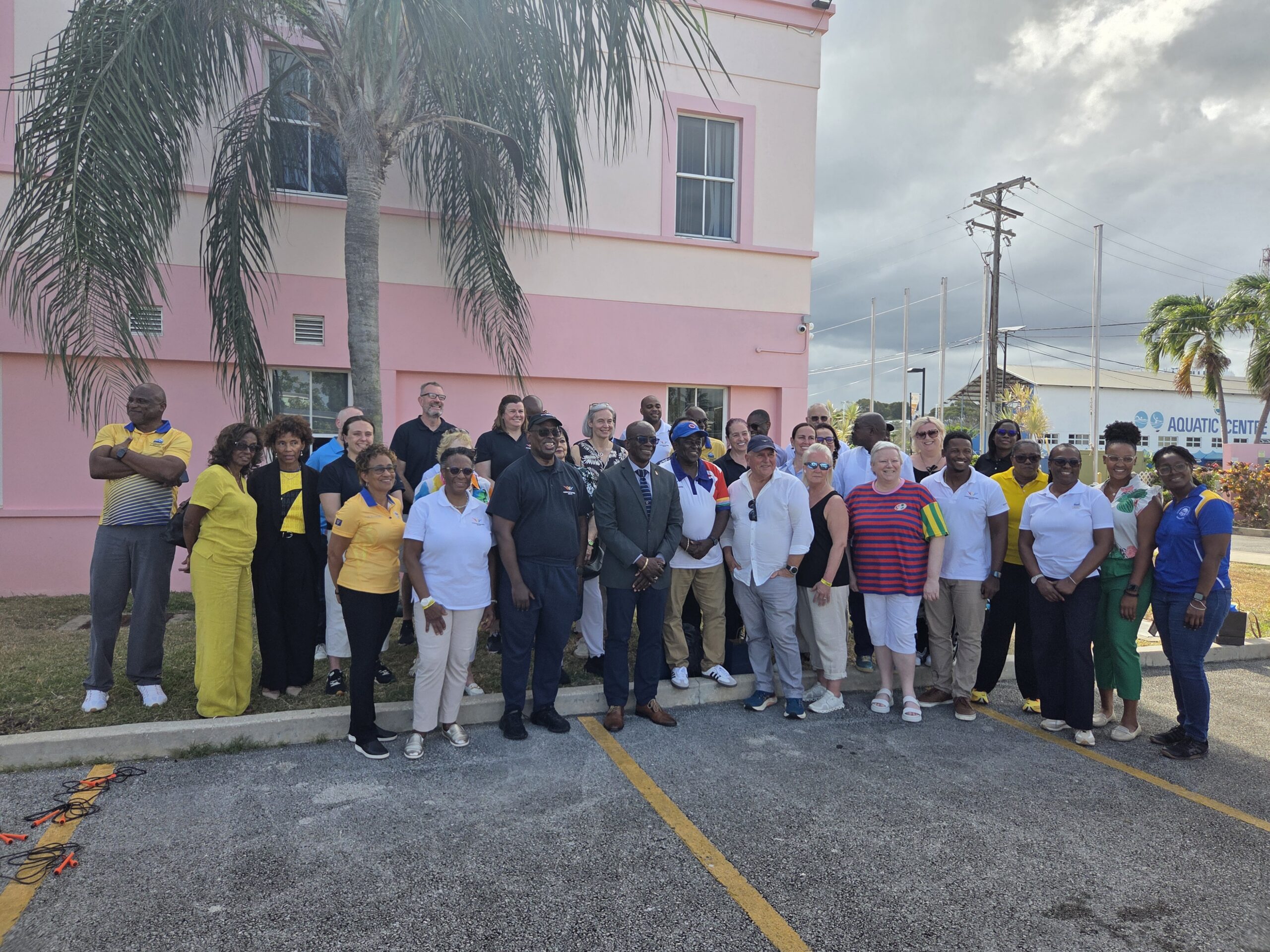
On a packed Wednesday in Barbados, top leadership from Commonwealth Sport got an up-close, immersive look at the island nation’s iconic sporting landmarks, natural attractions and one-of-a-kind local athletic tradition, wrapping up a day of cultural engagement after a series of formal governance meetings and government discussions.
The itinerary, organized by the Barbados Olympic Association (BOA), took the 26-member executive delegation beyond standard sports industry site visits to highlight what makes Barbados unique. Stops included the world-famous Kensington Oval, a historic cricket ground that has hosted some of the biggest matches in international cricket, and Harrison’s Cave, a stunning natural geological formation that showcases the island’s commitment to preserving and showcasing its natural heritage. The day’s activities culminated at the BOA’s Wildey headquarters, where the group was treated to a showcase of road tennis, Barbados’ homegrown athletic discipline.
What made the showcase particularly memorable was the opportunity for participating executives to step onto the court themselves. Commonwealth Sport President Dr Donald Rukare joined other board members for casual, friendly matches against local coaches and young student players, getting a first-hand feel for the fast-paced, accessible sport that has grown in popularity across the island. Even informal moments throughout the day, including a light-hearted exchange with Barbados’ Minister of Sport Charles Griffith, underscored the warm welcome extended to the Commonwealth delegation.
For Sandra Osbourne, BOA President and Commonwealth Sport vice-president, the visit marked a meaningful milestone for the small island nation. Osbourne explained that while Barbados harbors long-term ambitions to host major Commonwealth Games events in the future, the current visit offered an accessible, important opportunity to welcome the broader Commonwealth sport family even as the country builds its capacity for larger competitions.
“As a small Commonwealth sport association, stepping up to host major games comes with unique challenges,” Osbourne noted. “But even if we aren’t ready for a full games right now, hosting the executive board meeting let us open our doors and share all that Barbados has to offer. This week has gone extraordinarily well, with productive formal meetings yesterday followed by today’s cultural immersion that let us show off more than just our sporting facilities.”
Unlike many visits that focus exclusively on sports infrastructure, Osbourne said the planning team intentionally prioritized showcasing Barbados’ full range of offerings. By including both natural and cultural landmarks, the delegation got a holistic view of what the island can offer to future sporting and community events. The choice to highlight road tennis, an unaffiliated indigenous sport that Barbados has actively promoted globally, aligned with that goal: the BOA converted two parking lot courts to host the showcase, giving young local players a chance to share their sport with international leadership.
Founded back in 1930, the Commonwealth Sport Movement unites 74 independent nations and territories across the globe, building a connected community of more than 2.5 billion people — roughly one-third of the world’s total population. The Barbados visit is part of the organization’s ongoing work to engage member associations of all sizes, support small island nations in growing their sporting sectors, and celebrate the unique athletic and cultural traditions that make each member community distinct.