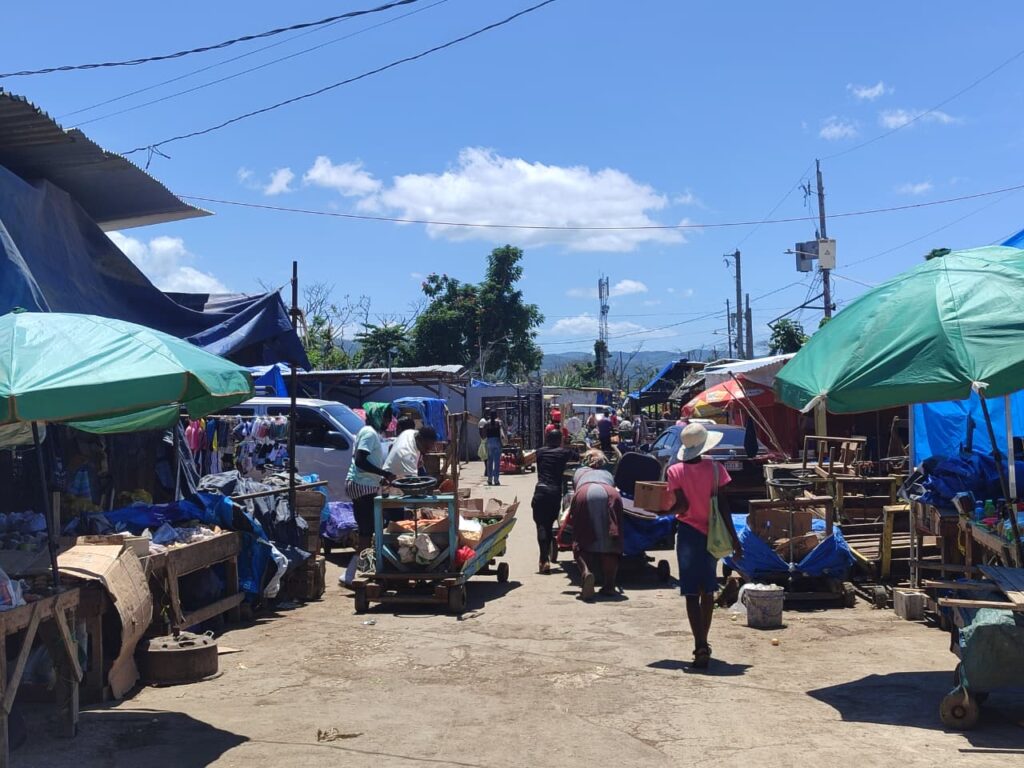
ST JAMES, Jamaica — Local municipal leaders are moving forward with a sweeping reorganization and infrastructure upgrade of Montego Bay’s iconic Charles Gordon Market, aimed at resolving longstanding frictions between vendors, eliminating unregulated street vending, and creating a cleaner, more welcoming space for both sellers and shoppers.
During an on-site walkthrough of the facility Monday, Richard Vernon, Chairman of the St. James Municipal Corporation and Mayor of Montego Bay, outlined the multi-pronged transformation strategy in an interview with Observer Online. At the core of the plan is a strategic rezoning of underused or vacant market space to resolve the core conflict that has left many small retail vendors at a competitive disadvantage.
Vernon explained that for years, the market has allowed wholesale suppliers, who already bulk-sell goods to small retail vendors, to also sell directly to walk-in customers at lower price points within the same retail zones. This unfair undercutting has sparked dozens of complaints from local small vendors, who cannot match the bulk pricing wholesalers offer. To fix this imbalance, the corporation will repurpose a block of currently underused and vacant shop spaces—some of which are held by non-compliant occupants—to create a dedicated, centralized wholesale zone. The new area will also accommodate mobile wholesalers who currently sell from their vehicles, providing designated parking and selling space to keep them organized.
Under the new layout, retail vendors will operate exclusively from the market’s main building and the existing Gun Court area, eliminating direct price competition between wholesalers and small retailers. Vernon emphasized that the reorganization will not displace compliant vendors, noting that most of the spaces being converted are already empty or held by rule-breaking occupants, leaving no legitimate seller disadvantaged by the changes.
Beyond zoning, the overhaul will crack down on unregulated street vending, a practice that Vernon called “undesirable” and damaging to the local area. Vendors who set up unpermitted stalls along adjacent streets leave behind piles of food waste and debris, create persistent traffic congestion, block access to legally operating storefronts, and create a chaotic, uninviting environment for visitors. Going forward, all vendors will be required to operate within the official market boundaries, with new rules and enforcement to eliminate street vending entirely.
The upgrade will also include long-overdue infrastructure repairs and amenity improvements, funded in part by insurance payouts for damage to the market’s main building caused by Hurricane Melissa. According to Vernon, the insurance funds will cover replacement of the main building’s damaged roof, upgrades to interior lighting, and general structural repairs to create a safe, comfortable space for regular vending activity.
Additional improvements include expanding public restroom facilities to boost sanitation for both vendors and shoppers, a one-time deep clean of the entire market complex, and the hiring of a private professional cleaning company to carry out daily and weekly routine cleaning to maintain high hygiene standards long-term. The municipal corporation will also boost security presence across the market, and implement controlled access management at entry and exit points to keep vendors in designated zones and deter unregulated activity.
Vernon emphasized that the end goal of the overhaul is to build a well-organized, safe, and comfortable market that encourages customers to return to shop for local fresh produce, while supporting small retail vendors by removing the systemic challenges that have held back business for years.