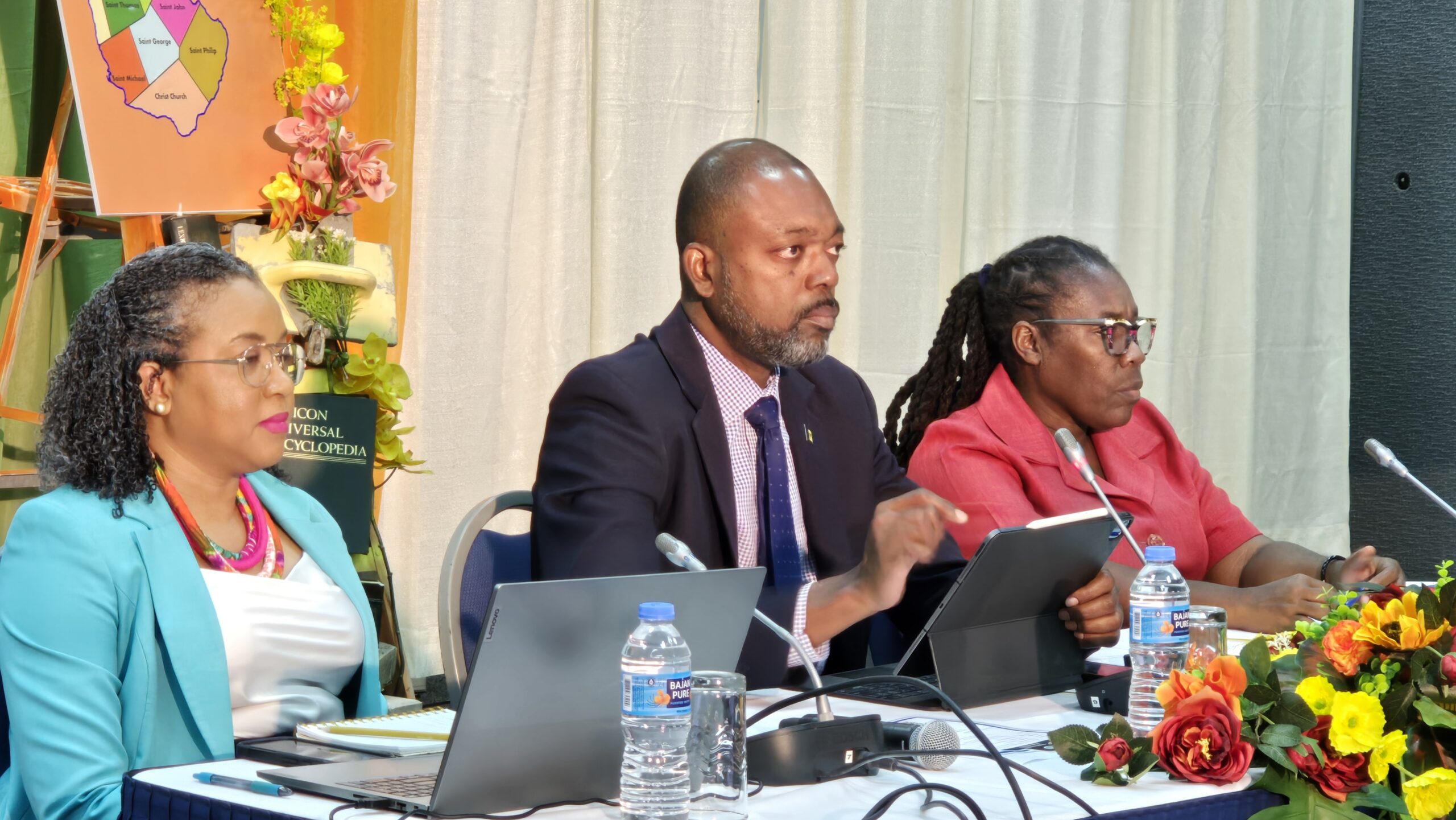
Against a backdrop of rising youth disengagement and growing public concern over antisocial behavior among young people, the government of Barbados has launched a transformative annual BBD 5 million fund to empower faith-based organizations to lead targeted interventions addressing youth deviance, while supporting skills building, employment inclusion, and the reinforcement of positive community values.
Third Sector Minister Colin Jordan made the formal announcement during the annual Faith-based Symposium hosted Friday at the Lloyd Erskine Sandiford Centre, which convened religious leaders and community organizers under the central theme “Building Our Young People, Our Future, Our Legacy”. In his keynote address, Jordan emphasized that funding is not the end goal of the initiative, but merely a strategic tool to deliver meaningful, long-term change.
“Funding is not the goal. Funding is merely an instrument. Impact is the goal: changing lives, changing perspectives, changing outlooks. That is the goal of the fund that government has set up. Transformation is the goal,” Jordan told attendees. He explained that the dedicated annual fund was established specifically to address the persistent resource gaps many faith-based organizations have faced in the wake of the COVID-19 pandemic, which stretched community organizational budgets and limited their ability to expand youth programming.
The funding is open to both expanding existing successful programs and launching new, innovative interventions aligned with the initiative’s core objectives. For established projects, the support will strengthen programming that keeps young people engaged in constructive activities, equips them with market-relevant practical skills, and opens clear pathways to formal employment and small business entrepreneurship. For emerging ideas, the fund is designed to back new guidance and development projects that faith leaders believe can deliver meaningful impact for local youth populations.
As the initiative moves toward final implementation, government has shared a draft framework with symposium attendees and is actively soliciting feedback to refine the proposal before it receives final Cabinet approval. Jordan noted that the draft has already been submitted for Cabinet review, but policymakers intentionally paused formal approval to center input from the faith organizations that will lead the work on the ground. “We use this opportunity in the ministry to hear perspectives and to see if there are any tweaks, any adjustments that we have to make, or if you feel it is so badly put together that we have to toss it out and start fresh,” Jordan said, underscoring the government’s commitment to collaborative, community-led design.
Jordan stressed that the initiative’s success will be measured by tangible, quantifiable outcomes rather than good intentions alone. Key performance indicators will include increased youth participation in structured positive programming, expanded access to certified skills training and employment pathways, measurable reductions in youth involvement in crime and antisocial behavior, stronger family and community connections, and the broader embedding of positive moral and social values among young program participants. The overarching vision, he explained, is to nurture a generation of young Barbadians that are both employable and socially responsible, ambitious but rooted in community, skilled and guided by strong ethical principles.
Accountability for public fund expenditure is also a core requirement of the initiative. “Good intentions must be translated into well-designed programmes where vision is supported by planning and passion, met with measurable targets. We must be able to look back and see whether or not our expenditure has been met with the results we expected,” Jordan said.
Beyond direct project funding, the symposium also focused on building long-term organizational capacity for faith-based groups, ensuring they have the spiritual, administrative, and strategic resources needed to deliver sustainable impact. To help organizations develop competitive, high-quality funding proposals, the government has partnered with Karen Phillips, founder of Kainos Caribbean, to deliver targeted training in grant writing and proposal development. Jordan noted that many community groups have strong, impactful ideas but lack the technical skills to present those ideas clearly to funders, and the training is designed to remove that barrier.
Outlining the broader social and economic benefits of the initiative, Jordan framed the investment in youth development as a catalyst for whole-community transformation. “When young people are trained, certified and supported, they transition more effectively into the labour market, they become contributors rather than dependents, and they become innovators rather than bystanders,” he said. “When communities rally around their young people, something powerful happens. Hope replaces despair, purpose replaces idleness, and peace replaces disorder.”