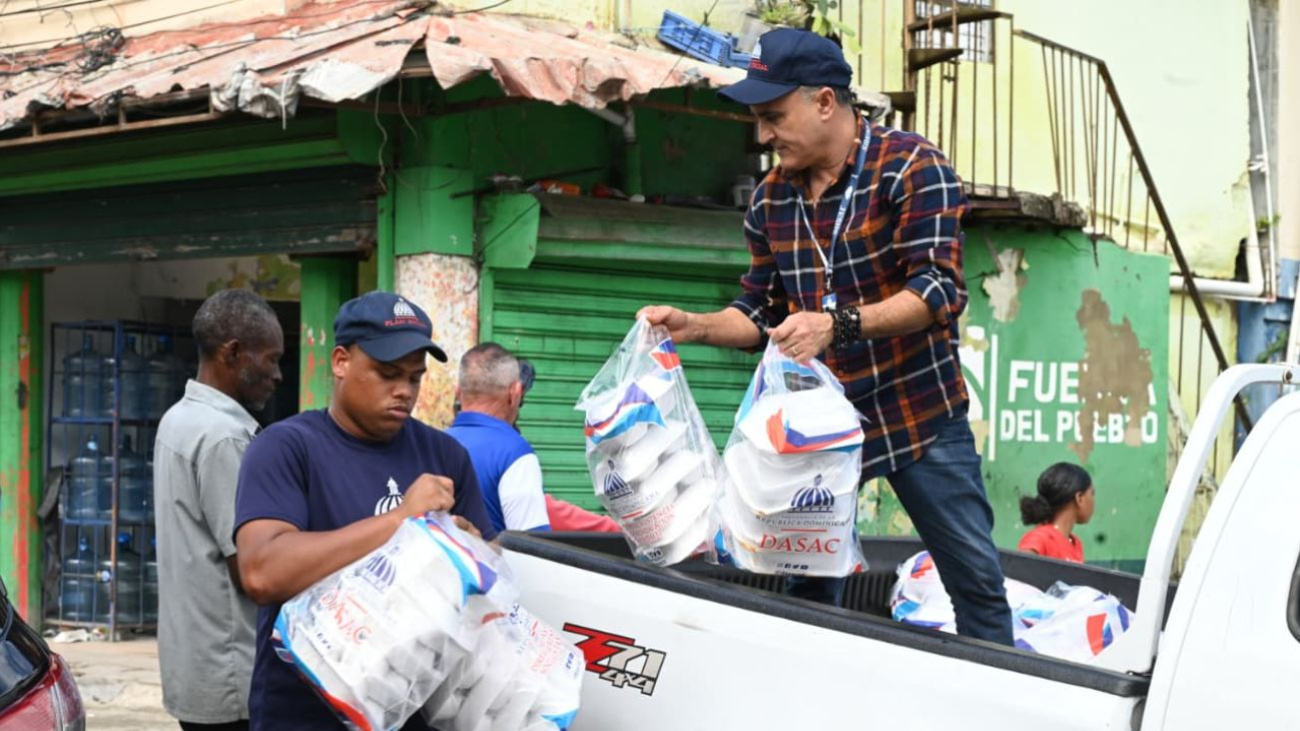
In the Dominican Republic, widespread severe flooding triggered by relentless recent heavy rainfall has left hundreds of families displaced and in urgent need of support, prompting rapid disaster response action from the country’s Directorate of Social Assistance and Community Food (Dasac). The government agency has mobilized specialized response brigades to deliver life-sustaining emergency supplies to hard-hit communities across at least four administrative regions, addressing immediate food insecurity in the wake of the natural disaster.
Dasac Director Édgar Augusto Féliz Arbona personally took charge of on-the-ground response operations in two of the most affected areas: the northern and western municipalities of the national capital district, Santo Domingo. Response teams working under his leadership distributed thousands of prepared meals to vulnerable residents in low-lying, heavily impacted neighborhoods including La Arenita, El Aguacate, Los Platanitos, and Manganagua, where floodwaters have destroyed homes and cut off access to local grocery and food supply networks.
Beyond the Santo Domingo metro area, additional mobile response brigades have been dispatched to extend support to affected households in two more provinces: San Cristóbal, located along the country’s southern coast, and Valverde, in the northwestern Cibao region. Local disaster management officials confirmed that the entire agency remains on heightened alert under direct orders from Dominican Republic President Luis Abinader, who prioritized rapid, people-centered response to the flooding disaster.
To expand outreach and meet diverse community needs, Dasac has deployed a full network of response assets: fully mobile kitchen units that can prepare hot meals close to flood zones, fixed community soup kitchens for residents who have relocated to emergency shelters, and specialized damage assessment teams that survey impacted residential areas to document housing damage and identify unmet needs for long-term recovery support. To streamline communication with affected residents, the agency has also publicized a dedicated emergency hotline (829-222-9194) across all its official social media platforms, allowing community members to submit urgent requests for aid directly to response coordinators.