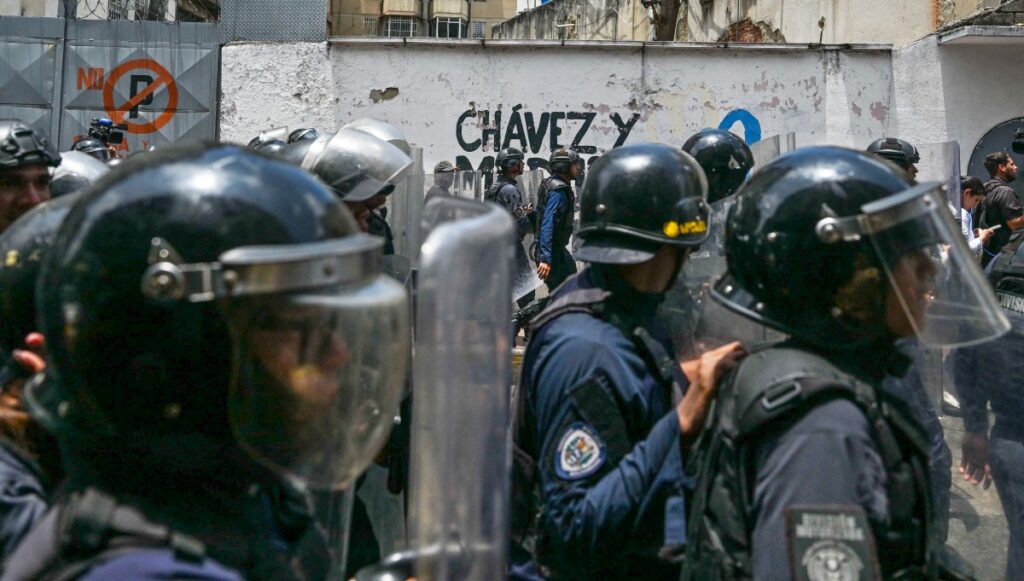
CARACAS, VENEZUELA – Thousands of Venezuelan demonstrators marching to the Miraflores Presidential Palace to demand urgent salary and pension hikes were dispersed with tear gas by riot police on Thursday, according to on-the-ground reporting from Agence France-Presse correspondents. The demonstration, the largest show of public dissent in the country since August 2024, marks a clear shift in the national mood: the pervasive climate of fear that gripped Venezuelan society during ousted former president Nicolas Maduro’s regime is steadily receding, allowing long-simmering frustrations over economic hardship to boil over into open protest.
As protesters advanced through downtown Caracas, crowds chanted “Yes, we can!” to amplify their demands for living wages, calling for increases to base pay that has remained stagnant since 2022 and left millions struggling to cover basic needs. When demonstrators drew within just a few blocks of the presidential compound, dozens of helmeted, shield-bearing riot police deployed tear gas to halt their advance. The resulting melee left one protester with a deep arm gash after being struck by a stray rock, AFP confirmed.
The confrontation lays bare mounting public anger at acting President Delcy Rodriguez, who replaced hardline socialist Maduro following his capture by U.S. forces in a January 3 raid. Rodriguez, who was endorsed by former U.S. President Donald Trump to take power in exchange for granting Washington access to Venezuela’s vast oil reserves, has faced growing criticism for failing to address the country’s devastating cost-of-living crisis. On Wednesday, the interim leader appeared on national television to announce a scheduled wage increase would go into effect May 1, but offered no details on the size of the hike – a move that left many Venezuelans furious.
Venezuela’s current monthly minimum wage stands at just 130 bolivars, equal to roughly $0.27 USD. By comparison, the United Nations’ daily poverty threshold of $3 USD works out to a monthly minimum of $90, meaning Venezuela’s base wage is more than 330 times lower than the global poverty line. Unions and workers across the country have long decried the current pay as “starvation wages”, a label echoed by demonstrators on Thursday.
Jesus Godoy, a retired public servant with more than two decades of state service, showed AFP reporters two 100-bolivar notes in his pocket – totaling just 40 U.S. cents. “I don’t even have enough for a packet of flour,” he said, echoing a widespread sentiment of resentment toward the country’s ruling class. “Government officials drive around in huge SUVs with full time bodyguards, while ordinary Venezuelans are left to suffer.”
While some public sector workers can earn up to $150 USD per month when including government-issued bonuses, that sum is still a fraction of the $645 USD that independent economic estimates calculate a Venezuelan family needs to cover basic food costs alone, amid annual inflation that has surged past 600%. Protesters are clear in their demands: they want increases to the stagnant baseline salary, not just one-off adjustments to bonuses that have been raised repeatedly while base pay remains frozen.
“We are demanding a living wage now, because what Delcy Rodriguez said last night is a joke,” said 65-year-old retiree Mariela Diaz, summing up the crowd’s frustration.
Rodriguez has defended her approach, framing a gradual, “responsible” wage increase as necessary to avoid triggering a further spike in already sky-high inflation. Since taking office in January, the former vice president has rolled out a series of major economic reforms and issued an amnesty for political prisoners, moves made under pressure from Washington to roll back Maduro-era repression. But as Venezuelans continue to struggle to afford daily essentials like food and medicine, public patience is wearing thin.
On Thursday, as the protest unfolded in Caracas, Rodriguez was abroad in Grenada – a small Caribbean nation northeast of Venezuela – for her first international trip as head of state, according to broadcast footage from Venezuelan state television.
Thursday’s demonstration marks a turning point for dissent in Venezuela. For two years, following harsh successive crackdowns on opposition voices under Maduro, most Venezuelans avoided open protest. The 2024 August demonstrations, which erupted after Maduro’s disputed claim of victory in that year’s presidential election, were brutally put down by security forces. Thursday’s gathering of 2,000 demonstrators signals a growing willingness among Venezuelans to openly push for change, even after years of repression.