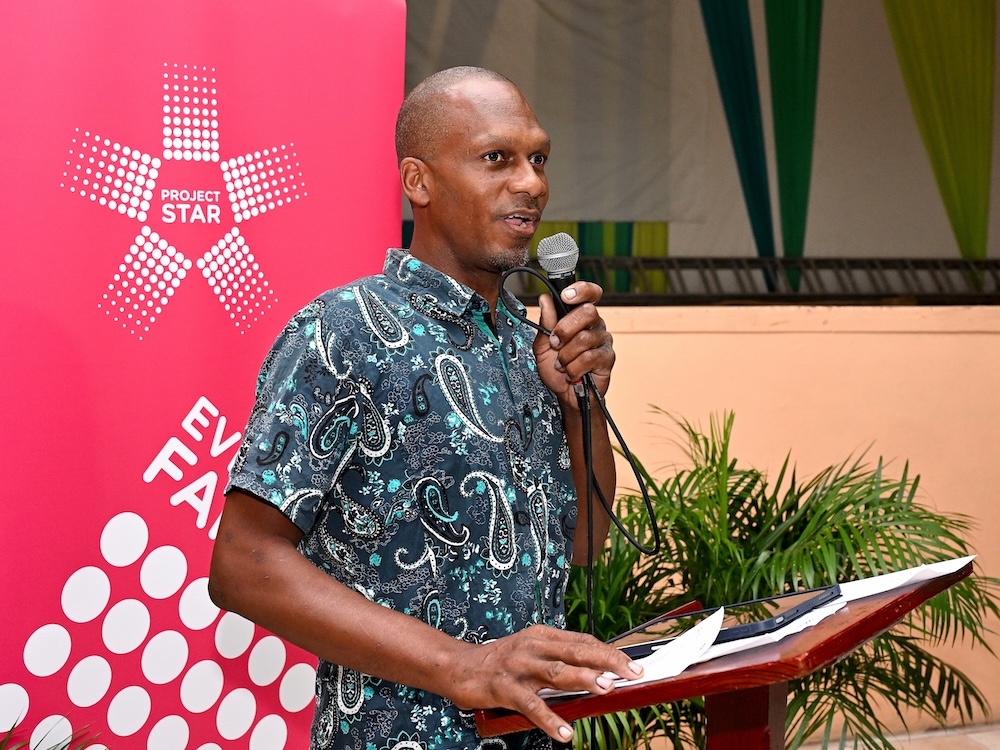
KINGSTON, Jamaica — Local community development initiative Project STAR has marked a key milestone in its three-year work in Rose Garden, announcing that over $1.8 million in startup funding has already been disbursed to local small-scale entrepreneurs through its targeted nano-grant program. The update was shared at a recent community town hall held in the heart of the Rose Garden neighborhood, where organizers and residents gathered to review progress, address unmet needs, and outline next steps for the long-term development project.
Unlike traditional cash aid programs, Project STAR’s nano-grant initiative is built on an integrated support model that combines financial backing with end-to-end business training, one-on-one mentorship, and ongoing hands-on guidance, according to Akieme Wilson, the project’s business development and financial inclusion officer. The program is designed to walk aspiring local entrepreneurs through every stage of launching a sustainable micro-enterprise: from refining initial business concepts and calculating operating costs to identifying target customer bases and building long-term viable business models. Grant funding covers the cost of essential tools, equipment, and raw materials that many residents could not afford upfront, turning untested ideas into fully operational small businesses.
Residents across Rose Garden have already begun to see tangible changes from the program. During the town hall, organizers highlighted the story of a local skilled tradesperson who previously had to rent workspace and equipment from external workshops to complete client jobs. After receiving the nano-grant to purchase his own tools, he can now operate independently, cut down on job delays, and keep a larger share of his earnings rather than paying for third-party access.
Project STAR first launched its intervention in Rose Garden three years ago in direct response to priorities identified by residents themselves: persistent high unemployment, fractured local family structures, and a lack of targeted development opportunities for young people. Wilson emphasized during the meeting that the project’s progress has always been community-led, noting, “The transformation underway didn’t start with us, it started with you” — a reference to the way residents helped shape every program and intervention to fit local needs.
All efforts fall under Project STAR’s broader social and economic development framework, which addresses interconnected issues from parenting support and family stability to workforce readiness and sustainable income generation. Skills and job training remain the backbone of the initiative. To date, more than 130 Rose Garden residents have completed the project’s job readiness programming, which includes intensive two-week skills bootcamps, specialized production workforce training, and local job fairs hosted in partnership with Jamaica’s Ministry of Labour and Social Security.
More than 100 of those trained participants have already secured permanent employment, with many sharing stories of life-changing impact. One participant, who has worked at a local hotel for nearly three years, described her participation in the program as transformative, saying it gave her the confidence and stable income to support her children independently.
Still, project leaders acknowledge that significant challenges remain. Kelly Griffith, Project STAR’s training and employment lead, noted that many residents still face persistent barriers including difficulty navigating workplace stress, preparing for job interviews, and retaining long-term employment. To address these gaps, the project has expanded its support services through partnerships with local agencies including the National Council for Drug Abuse and Restorative Justice, which now offer specialized training in stress management, conflict resolution, and emotional resilience for participants.
Upcoming additions to the program’s training roster include new courses in customer service, administrative support, and caregiving, which were delayed from earlier rollout plans and are now on track to launch in the near future. From the project’s inception, young people have remained the central focus of its long-term development strategy.
Griffith highlighted progress on the “High School Pathways to Success” initiative, which supports fifth and sixth-form secondary students through career exploration camps and hands-on business simulation activities. Project STAR has already formed a partnership with Kingston Technical High School and is working to expand these connections to additional local educational institutions. The project also prioritizes early youth entrepreneurship exposure, partnering with Junior Achievement Jamaica to deliver foundational business training to school-aged participants, teaching them how to turn their own ideas into working ventures from a young age.
The town hall closed by reinforcing the project’s core philosophy of community co-creation: Rose Garden residents are not passive recipients of aid, but active partners and co-creators of the progress the neighborhood has seen over the past three years. “These interventions are already creating real impact: strengthening local business ideas, encouraging grassroots innovation, building youth awareness of career pathways, and supporting sustainable income generation,” Wilson said, closing by noting that this progress is “only the beginning” of what the Rose Garden community can achieve together.