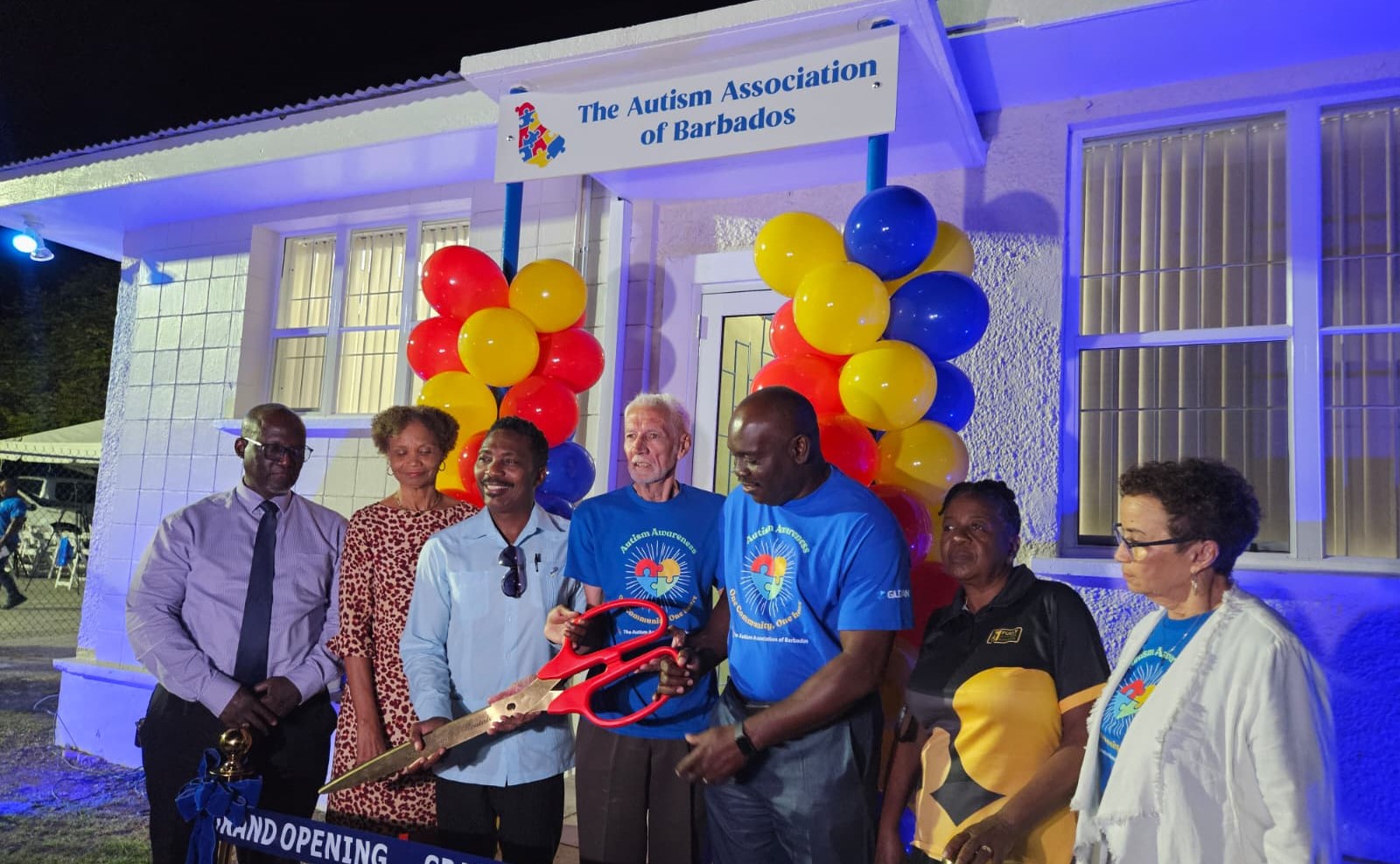
After more than two decades of operating without a fixed base, the Barbados Autism Association (BAA) has finally opened the doors to its permanent headquarters and training center, marking a transformative milestone for autism support services across the Caribbean nation.
The new multi-purpose facility, strategically located at the intersection of Dayrells Road and Garrison Road in St. Michael, celebrated its official opening on Thursday evening. Designed to serve dual purposes, the space will house the association’s administrative operations while also functioning as a dedicated life skills training hub, with a core mission of boosting independent living capabilities for autistic people of all ages.
BAA President Frederick Johnson framed the milestone as the product of 21 years of relentless advocacy, made possible by consistent backing from the national government, community partners, private donors, and autistic people’s families. “This building is far more than concrete and walls. It is a sanctuary where autistic children, teens, and adults can feel safe, seen, and valued for their authentic selves,” Johnson shared in his opening address.
Johnson emphasized a core shift in the association’s philosophy: autism is a neurodivergence to be understood, not a condition to be corrected. “Our role as a community and as family members is not to change autistic people. It is to build accessible spaces and equip them with the tools they need to contribute fully to society, alongside their loved ones,” he explained. He also acknowledged the longstanding fear shared by many parents of autistic children about their kids’ long-term future, noting that the new facility is the critical first step toward building a more robust system of lifelong care and independent support.
Minister of People Empowerment and Elder Affairs Adrian Forde called the achievement a national win, forged through years of sustained collaborative advocacy. Echoing Johnson’s framing, Forde noted that autism should never be treated as an inherent limitation, arguing that autistic people can thrive when given the right support systems. “Autism is not a barrier to contribution. When we open the door to equal opportunity, the unique gifts of autistic people will shine through,” he said, reaffirming that access to quality care and support is a fundamental human right for all disabled Barbadians.
Finance Minister Ryan Straughn added that the new center is part of a wider national policy shift toward integrated, family-centered support for disabled communities. He highlighted the Social Empowerment Agency’s ongoing work to deliver more cohesive, needs-aligned services, and revealed upcoming government plans to develop specialized trusts that will help families secure long-term care for their autistic children, with officials set to work with local stakeholders to finalize the framework in the coming months.
Roseanne Tudor, Operations Manager of the Barbados Council for the Disabled, walked attendees through the BAA’s 21-year history, from its founding in 2004 through periods of uneven progress and inactivity, to its major revitalization in 2017. Tudor called the new center a testament to the community’s unwavering persistence, noting that “it is far more than a building – it represents stability, it represents new opportunity, and it represents dignity for autistic Barbadians.”
Even amid the celebration, Tudor urged stakeholders not to mistake progress for completion. “Our work is far from done,” she said, calling for sustained advocacy to embed disability inclusion as a non-negotiable principle across every sector of Barbadian society.
Looking ahead, the BAA will launch its first life skills pilot programme later this year, serving six autistic adults transitioning out of the formal school system. The programme will focus on building practical, daily living skills to support independent living, with plans to expand access to more participants based on community demand as the association continues scaling its support for autistic people and their families across Barbados.