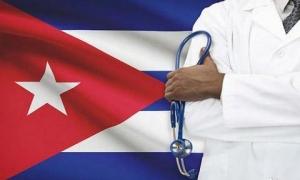
Nearly three decades of life-saving international medical collaboration between Cuba and Guatemala is drawing to a close, as the first cohort of Cuban healthcare workers prepares to touch down on Cuban soil Tuesday, following the Guatemalan government’s official announcement of a phased wind-down of the bilateral medical aid agreement. The outbound contingent was honored at a heartfelt farewell ceremony held one day prior in Guatemala, where leaders from both nations celebrated the extraordinary public health legacy the Cuban brigade leaves behind.
Nazario Fernández, the top Cuban diplomatic representative in Guatemala, opened the tributes by highlighting the transformative reach of the brigade’s work, which extended deep into Guatemala’s most isolated and underserved communities. Fernández commended the medical team’s decades of unwavering service, pushing back against bad-faith efforts to discredit their contributions. He emphasized that for 28 years, the brigade has embodied a radical, people-centered humanism that has been etched permanently into the hearts of the Guatemalan people, a legacy no criticism can erase. The ceremony also doubled as a tribute to Fidel Castro, the founding leader of the Cuban Revolution, coinciding with the centennial of his birth, before Fernández closed by wishing the departing workers a safe journey home.
Sheila Pamela Leyla, program coordinator for collaboration at Guatemala’s Ministry of Health and Social Assistance Directorate of Integrated Networks, took the stage next to extend a formal public thank you on behalf of the Guatemalan people. She reflected that the Cuban medical team did not just treat patients – they made Guatemala’s rugged mountain highlands, impenetrable jungle regions, and poorest urban neighborhoods their own home. Unlike foreign interventions that come with political strings or military power, Leyla noted, the Cuban brigade arrived with nothing more than stethoscopes and an unshakable commitment to serve. For millions of Guatemalans who had never accessed quality, affordable medical care before the brigade’s arrival, these Cuban workers became the very face of hope.
Leyla described the scale of the brigade’s work as a monument to cross-border fraternity that far transcends routine medical service. “They leave with their heads held high, with the heroic satisfaction of a duty fulfilled and with the certainty that their time in our country has left a mark of health and dignity that time can never erase,” she said, echoing Fidel Castro’s core precept that internationalism means repaying one’s shared debt to humanity. Leyla also highlighted the brigade’s broader ideological contribution: their work proved that healthcare is a moral calling, not a commercial commodity to be bought and sold.
Back in Cuba, a parallel tribute unfolded at Havana’s José Martí Plaza on Las Américas Avenue, where returning brigade members joined representatives of Cuba’s other international medical missions to lay a floral arrangement at the bust of Cuba’s national hero. Standing before the monument, the group declared in unison that their mission had been successfully completed. Records of the collaboration show that the Cuban medical presence in Guatemala dates back to November 5, 1998. Over the following 28 years, thousands of Cuban healthcare workers served in 16 of Guatemala’s 22 departments, navigating challenging terrain, limited resources, and complex public health crises with extraordinary dedication, ethical conduct, and respect for local communities. As the phased withdrawal proceeds, the legacy of their work shaping access to care for millions of Guatemalans will remain.