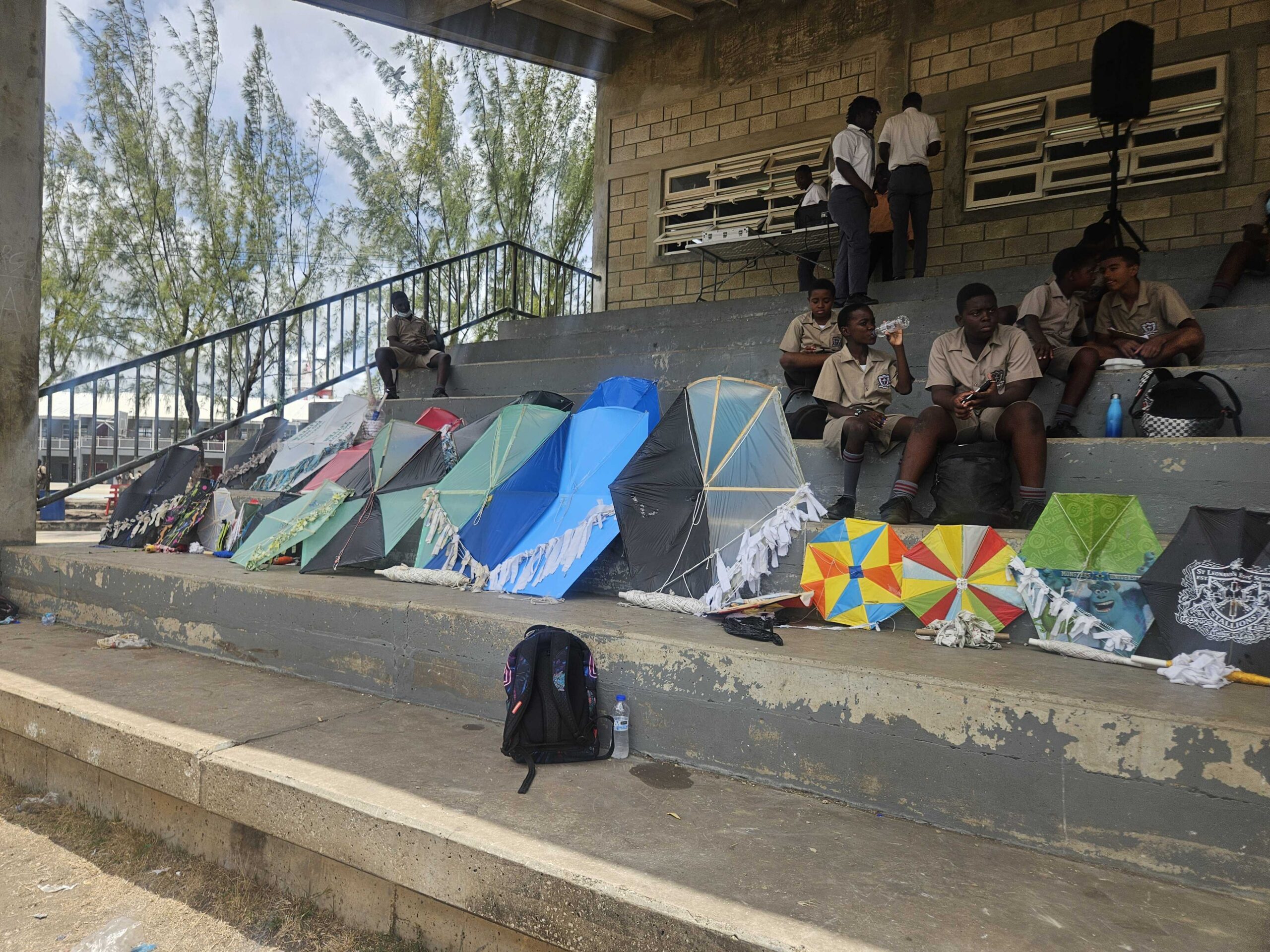
The skies above St Leonard’s Boys’ School in St Michael came alive with a vibrant display of color and creativity as dozens of handmade kites soared in the breeze, marking a special end-of-term celebration that blended cultural preservation with educational development. The school’s pasture transformed into a dynamic cultural arena where nearly 50 first-form students showcased their craftsmanship through designing, building, and flying their own kites.
Principal Peter Cox revealed that the initiative emerged organically from student enthusiasm rather than administrative planning. “This activity was genuinely initiated by the students themselves,” Cox explained. “Kite flying remains particularly popular in the Black Rock area throughout the year, so we simply facilitated their interests.”
The event served dual purposes: preserving Barbados’ cultural heritage while providing hands-on learning opportunities. Cox noted the evolution of kite-making traditions, observing a shift from traditional round kites to square designs and from paper to plastic bag materials. Despite these modern adaptations, the school aims to maintain the core skills and traditions associated with kite craftsmanship.
Beyond cultural preservation, the activity provided valuable developmental benefits. “It creates an avenue for students to express themselves creatively and engage in hands-on learning outside conventional academic settings,” Cox emphasized. “It allows them to unwind and participate in activities that resonate with their interests.”
School staff have already begun planning to deepen the initiative’s impact. Discussions are underway to increase teacher involvement and reintroduce more traditional construction methods, including “trash bone kites” that represent historical Barbadian kite-making techniques. The goal is to transform the event into a broader family activity that strengthens community bonds.
Competition coordinator and first-form teacher Tracie Harris challenged assumptions about declining interest in traditional crafts among younger generations. “Last week demonstrated this tradition is far from dead,” Harris stated. “We witnessed numerous students enthusiastically gathering materials, constructing kites, and discussing designs—clear evidence that kite-making remains very much alive.”
Despite challenging wind conditions, student participation and energy exceeded expectations. The competition featured eleven categories recognizing various achievements, including:
– Kemar Worrell: Largest Kite
– Andre Leacock: Smallest Kite
– Jahari Prescod: Most Colourful Kite
– Taylor Hardin: Most Creative Design
– Adrian Codrington: Longest Tail
– Jordan Taylor: SLB Spirit Kite Award
– Jathaniel Bryant-Haynes: Loudest Kite
– Rakai Dowridge: Best Self-Made Kite
– Alex Jones-Ifill: Longest Flying Kite
– Malik Griffith and Aaron Howard: Judges’ Pick (shared)
– Wykayvion Gilkes: Fan Favourite
The successful event demonstrated how student-driven initiatives can effectively preserve cultural traditions while fostering creativity, community engagement, and practical learning experiences.