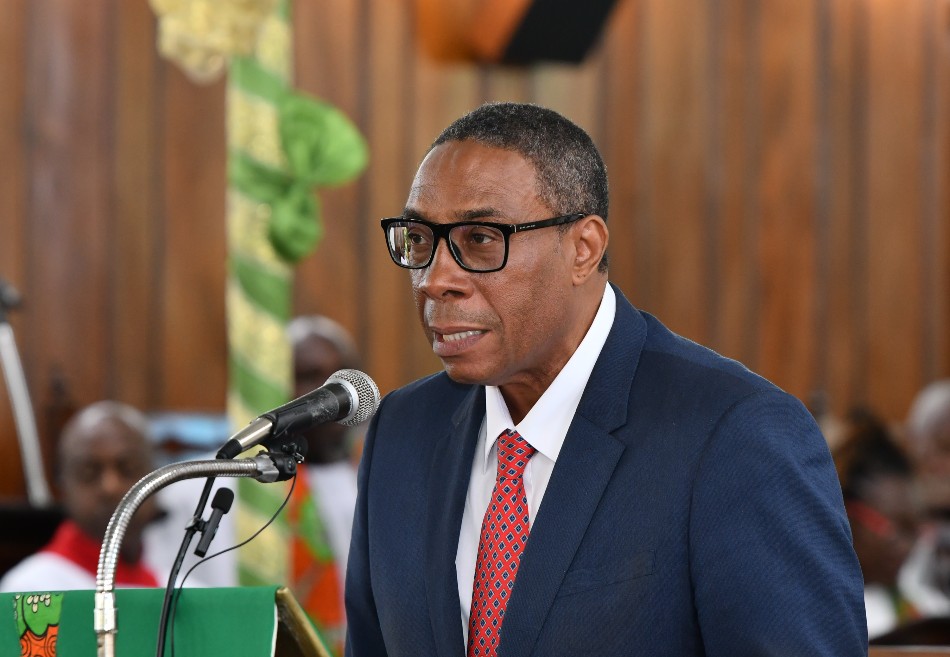
In a compelling address during Monday’s parliamentary debate on the Appropriations Bill, Senator John King issued an urgent call for Barbados to fundamentally reposition its sports and cultural sectors from peripheral activities to central drivers of national development. The former culture minister articulated a visionary blueprint suggesting these creative industries could emerge as the nation’s next major economic engines if strategically harnessed.
Senator King highlighted the paradoxical reality that while Barbados has consistently produced world-class talent across sporting and cultural domains, the nation has historically failed to capitalize on the substantial business potential inherent in these sectors. He pointed to the recently concluded 2024 ICC T20 World Cup, successfully hosted in Barbados, as demonstrating the transformative economic impact possible through major event staging. However, King challenged the government to pursue more ambitious initiatives by developing and owning homegrown tournaments and events.
“Imagine the possibilities if Barbados were creating tournaments ourselves—events where we maintain intellectual property rights and control broadcasting privileges,” Senator King proposed. “The revenue potential from owning these events represents an economic frontier we must seriously explore.”
The government senator elaborated on the extensive economic multiplier effects generated by sports investments, noting benefits extending far beyond athletes to create employment opportunities in sports nutrition, psychological support services, media production, and local service sectors including transportation and vending operations.
Drawing from his previous experience as supervisor at the Government Industrial Schools, King emphasized the profound social value of sports as instruments for crime reduction and community cohesion. He shared poignant observations of how paternal attendance at youth cricket or football matches could effectively mend fractured family dynamics among at-risk adolescents.
“Witnessing a father appear to support his son’s football match or boxing performance—and the subsequent positive transformation in their relationship—demonstrates how sports investment transcends financial calculations,” King reflected. “The social returns significantly outweigh mere dollar valuations.”
Addressing cultural heritage, Senator King expressed concern that Barbados continues to undervalue its unique assets, ranging from distinctive linguistic patterns to historical monuments. He referenced Jamaica’s successful commercialization of patois and Cuba’s internationally acclaimed ballet and sports programs as exemplars of what strategic cultural valuation can achieve.
King asserted that Barbadian narratives represent “endless” creative resources that should be leveraged to produce films, documentary features, and merchandise for global audiences. “We possess compelling stories awaiting narration and remarkable sites that we might overlook but would captivate international visitors,” he noted. “Transforming our mindset regarding asset valuation represents the crucial first step.”
While acknowledging current budgetary allocations for facility improvements, the senator cautioned that infrastructure alone proves insufficient. He advocated for enhanced mentorship frameworks and systemic educational reforms to better nurture children demonstrating aptitude in dance or sports rather than conventional academic pursuits.
Referencing the global achievements of Barbadian icons like Rihanna and West Indies Women’s cricket captain Hayley Matthews, King postulated that if individuals can excel “with minimal institutional support,” the next generation—buttressed by deliberate government investment—could achieve unprecedented success, ultimately positioning Barbados as a global leader in sports and cultural innovation.