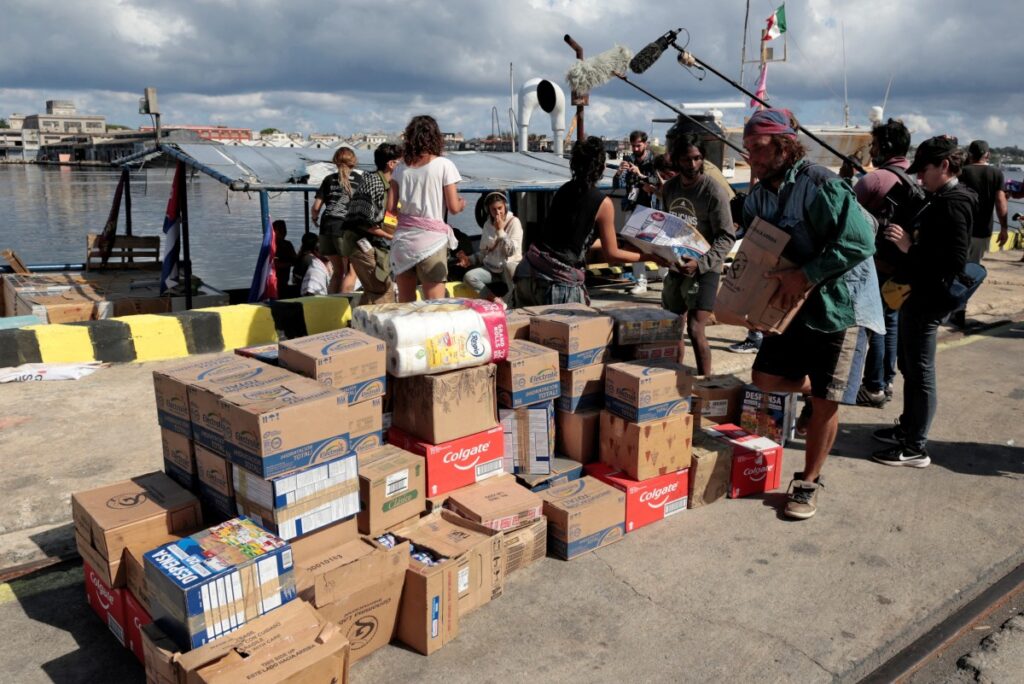
HAVANA, Cuba — In a direct challenge to U.S. sanctions, the inaugural vessel of an international humanitarian flotilla successfully docked in Havana on Tuesday, delivering essential medical supplies, food provisions, and solar power equipment to an island nation grappling with a severe energy crisis. The ‘Maguro’ shrimp boat, symbolically rebranded ‘Granma 2.0’ in homage to the yacht used by Fidel Castro’s revolutionaries in 1956, completed its voyage from Mexico’s Yucatan peninsula after navigating formidable maritime conditions and technical difficulties, arriving three days behind schedule.
The docking ceremony witnessed emotional scenes as activists assembled on the cabin roof holding a ‘Let Cuba Live’ banner, while supportive crowds on the pier echoed with chants of ‘Cuba yes! Blockade no!’ This maritime mission, dubbed the ‘Our America Convoy,’ represents one segment of a broader multinational relief effort that initially dispatched approximately 50 tonnes of humanitarian cargo via air transport from Europe, Latin America, and the United States last week.
Organized under the banner of the Progressive International, a global left-wing coalition, the initiative has garnered official endorsement from the Cuban government. David Adler, the convoy’s coordinator and a U.S. citizen, articulated to AFP that the mission simultaneously addresses urgent humanitarian needs while highlighting what he characterized as ‘the human costs of Trump’s siege on Cuba.’ Adler further emphasized that the effort ‘demonstrated that international solidarity can triumph over forced isolation.’
Cuba’s current energy predicament has reached critical proportions, with seven nationwide blackouts recorded since the beginning of 2024—two occurring within the past week. This electrical instability stems from a combination of antiquated thermoelectric infrastructure and acute petroleum shortages, exacerbated significantly by the Trump administration’s January imposition of a de facto oil blockade. The situation deteriorated further following the detention of Venezuelan socialist leader Nicolás Maduro—Cuba’s principal regional ally—by U.S. forces, accompanied by threats of tariffs against nations supplying oil to the island.
Despite the humanitarian narrative advanced by organizers, the mission has encountered substantial criticism from Cuban exile communities and political opponents. Luis Zuniga, a former political prisoner now residing in Miami, dismissed the operation as ‘nothing more than a political sideshow,’ contending that Cuba’s electricity crisis predates recent sanctions and originates from systemic governmental failures.
The flotilla’s participants include activists from Australia, Brazil, Ecuador, Italy, Mexico, and the United States, several possessing prior experience in maritime aid missions. Notably, Brazilian organizer Thiago Avila previously coordinated a similar flotilla attempt to Gaza that was intercepted by Israeli forces last year. Another Brazilian activist, Lisi Proenca, highlighted the strategic advantage of maritime transport for delivering substantial equipment like solar panels that are impractical to ship by air.
As Cuba confronts soaring fuel prices, collapsed public transportation systems, and accumulating urban waste due to inoperative garbage trucks, the government consistently attributes these hardships to Washington’s long-standing trade embargo and recent fuel restrictions. With two additional aid vessels anticipated imminently, this humanitarian confrontation continues to unfold at the intersection of geopolitical tension and human necessity.