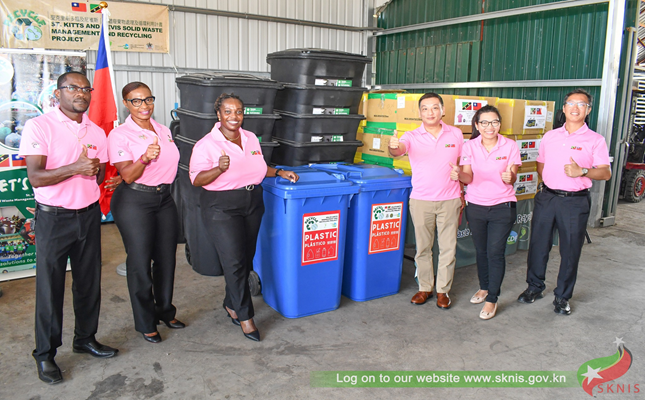
In a significant stride for environmental cooperation, the governments of Taiwan and St. Kitts and Nevis have inaugurated an advanced recycling facility, marking a new chapter in their joint sustainability efforts. The official opening ceremony for the expanded plant at the Conaree Landfill was held on March 18, strategically coinciding with Global Recycling Day observances.
The project, formally titled the ‘Solid Waste Management and Recycling Project (Let’s Recycle in St. Kitts and Nevis),’ is operated by the Taiwan Technical Mission under the Taiwan International Cooperation and Development Fund (TaiwanICDF). The centerpiece of the expansion is a state-of-the-art horizontal baler system designed to dramatically boost processing capabilities and operational efficiency for recyclable materials across the Federation.
Ambassador Edward Ling-wen Tao, representing Taiwan at the ceremony, emphasized the deepening bilateral commitment to ecological preservation. ‘This initiative reflects our shared dedication to fostering environmental sustainability, enhancing climate resilience, and pioneering circular economy models that transform waste into valuable resources,’ he stated during his address.
The event served as a platform for tangible demonstrations of this partnership. Taiwan presented 32 specialized recycling bins to enhance community collection infrastructure. Additionally, officials distributed 900 eco-friendly T-shirts and 400 reusable shopping bags—all manufactured from recycled PET bottles originally collected within St. Kitts and Nevis, physically embodying the project’s closed-loop philosophy.
Project Manager Ms. Joyce Chang conducted an educational presentation detailing the technical process of converting plastic waste into marketable products. The ceremony also featured testimonies from local students who toured the facility, highlighting successful youth engagement in environmental stewardship.
This collaboration represents a practical implementation of South-South cooperation, focusing on technology transfer and sustainable development. Both nations have committed to continuing this partnership, aiming to build greater environmental resilience and economic opportunity through innovative waste management solutions.