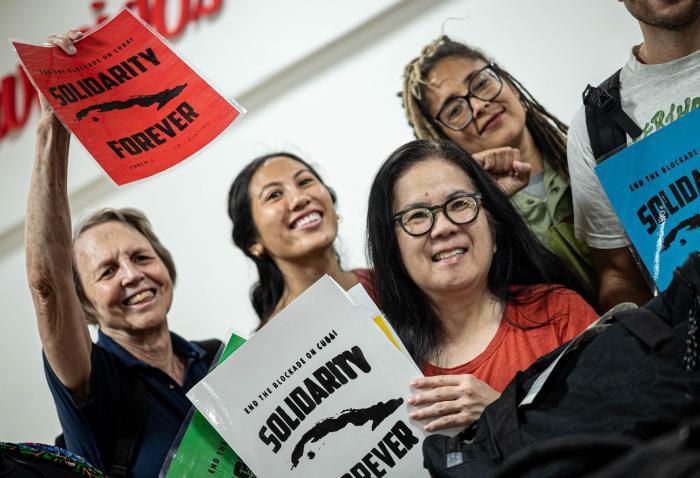
A multinational humanitarian initiative dubbed the “Our America Convoy” has arrived in Havana with substantial material support for Cuba, representing a significant display of Pan-American solidarity against what organizers characterize as genocidal U.S. policies. The convoy, carrying essential medicines, food supplies, medical equipment, and educational materials, originated from multiple nations including Brazil, Colombia, Uruguay, Mexico, and even the United States itself.
The initiative emerged in February 2026 as a direct response to the intensified energy blockade and economic sanctions against Cuba. David Adler, founder of the movement and participant in the Global Sumud Flotilla to Palestine, emphasized that while the physical supplies cannot fully address Cuba’s needs, the convoy serves as “a spark for a new international solidarity movement” aimed at pressuring governments to provide energy resources and break the decades-long blockade.
Fernando Pereira, president of Uruguay’s Frente Amplio, delivered a powerful message upon arrival: “A people without a soul has little future.” He referenced Cuba’s historical humanitarian contributions, particularly Operation Miracle which restored vision to nearly 100,000 Uruguayans, stating that “parties that show gratitude when things are at their worst are the ones that should be there.”
Brazil’s representation, led by Mónica Valente of the São Paulo Forum, announced parallel efforts to fundraise for solar panels to aid Cuba’s electricity generation. Valente condemned the escalating blockade despite annual UN resolutions calling for its end, noting that “every year, the United Nations approves by a large majority the end of that policy, and yet it intensifies.”
The convoy notably included U.S. representatives from Pastors for Peace, continuing their decades-long support. Executive Director Claudia de La Cruz stressed that current U.S. administration policies “do not represent the sentiments of the American people” and emphasized their commitment to opposing aggression against Cuba.
Youth representation was provided by Alexandre Pupo of the International Youth Organization for Ibero-America, representing 21 member states who view Cuba as “a beacon of hope for justice.” The convergence of multiple generations and nationalities demonstrates growing international recognition of what Adler termed the “historical debt” owed to Cuba for its struggles for national and international liberation.