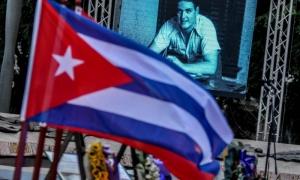
Sixty-nine years after the historic events of March 13, 1957, Cuba commemorates the courageous assault on the Presidential Palace and Operation Radio Reloj, operations that profoundly impacted Havana and the entire nation. These actions stand as enduring symbols of extraordinary bravery, selfless heroism, and unwavering commitment to revolutionary ideals.
The operation’s legacy is powerfully encapsulated in the Political Testament of José Antonio Echeverría, who famously declared: ‘If we fall, may our blood mark the path to freedom. Whether or not our action achieves immediate success, the commotion it creates will propel us toward ultimate victory, though the people’s collective action remains decisive in achieving liberation.’
This historical episode represents a critical chapter in Cuba’s revolutionary tradition, born from the strategic alliance between the Revolutionary Directorate and the July 26 Movement. The combatants embodied anti-imperialist principles, drew inspiration from Cuba’s rich student protest heritage, and demonstrated profound identification with the aspirations of the common people.
The participants confronted the oppressive Batista regime with extraordinary courage, transforming ideological convictions into decisive action and revolutionary principles into unbreakable resolve. Their willingness to sacrifice everything for national liberation, even facing death with patriotic fervor, established an immortal example that continues to inspire subsequent generations.
The enduring significance of March 13th was acknowledged by Fidel Castro during a 1961 memorial ceremony at the University of Havana, where he emphasized that while Cuba commemorates numerous historical dates, certain events achieve symbolic status worthy of perpetual national remembrance. The legacy of these revolutionaries remains deeply embedded within Cuban academic institutions and continues to serve as both inspiration and rallying banner for preserving revolutionary achievements.