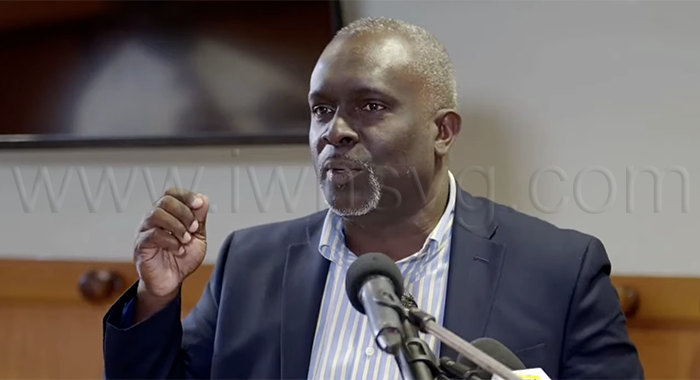
St. Vincent and the Grenadines’ Education Minister Phillip Jackson has issued a stark warning about the escalating crisis of school violence, dramatically invoking the famous Apollo 13 phrase to emphasize the severity of the situation. Speaking at the National Consultation on School Violence in Kingstown, Jackson declared, “Vincy, we have a problem,” framing the issue as a national emergency requiring collective action rather than isolated institutional responsibility.
The urgent consultation follows disturbing trends of violent clashes among students and open gang affiliations within educational institutions. The gravity of the situation was underscored by the tragic case of 17-year-old Alia Mc Dowall, who died in March from injuries sustained in a November 2024 stabbing allegedly involving another student. Doriel Duncan, a 17-year-old from Bethel High School, has been charged with wounding with intent and granted bail pending further court proceedings.
Minister Jackson emphasized that acknowledging the problem represents merely the initial step toward resolution. “The very fact that we are here at this consultation is an indication that we have recognised the problem,” he stated, stressing that true progress requires societal ownership rather than deflection of responsibility.
The gathering brought together senior police officials, national security stakeholders, education administrators, and students to address the crisis. Jackson called for universal engagement, urging parents, community leaders, clergy, educators, and all citizens to reject school violence and consider their individual roles in combating it.
Drawing inspiration from President John F. Kennedy’s iconic 1961 inaugural address, Jackson reframed the challenge: “Ask not what your country can do for you—ask what you can do for your country.” He encouraged all stakeholders to consider their personal contribution to reducing bullying, intimidation, gang relationships, and violence in schools.
The minister analyzed the consultation’s theme—”Safer schools; safer communities”—through the lens of cause and effect, while also proposing an inverse relationship. Jackson argued that school violence often reflects deeper community issues, stating: “The problems in our schools are manifestations of a malaise in our communities.” He described school violence as symptomatic of broader societal illness rather than the disease itself.
Jackson highlighted research indicating that student performance and behavior are significantly influenced by social bonding and stakeholdership. He suggested simple community-building practices, such as classroom birthday celebrations, to foster responsibility and connection among students. According to the minister, students who feel invested in their school community develop “a stake in conformity” and become protective of their educational environment.
Conversely, Jackson explained how consistent academic failure—particularly among males facing social pressure to demonstrate toughness—can sever these bonds, increasing delinquency risks. He described the “frustration-aggression cycle” wherein students struggling with literacy and numeracy become alienated in high-pressure academic environments.
The minister cautioned against dismissing bullying as minor sensitivity, noting that such behavior often transfers from home or community experiences. While emphasizing that bullying shouldn’t become the sole focus, Jackson urged educators to recognize early warning signs and demonstrate serious attention to these issues to prevent escalation.