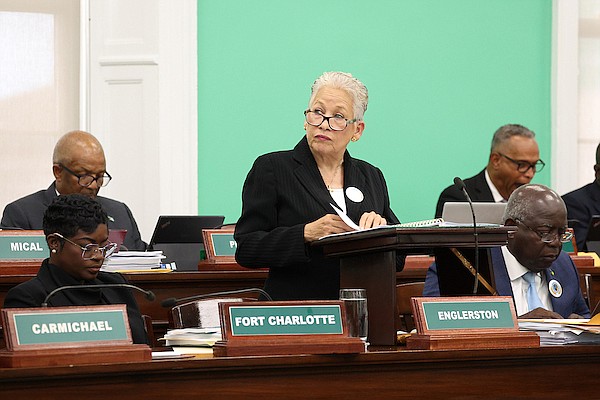
The Bahamian government, under the Davis administration, has introduced a transformative Education Bill that represents the most substantial reform of the nation’s education framework in over six decades. This comprehensive legislation aims to modernize the educational landscape through multiple strategic interventions.
Central to the proposed reforms is the reduction of compulsory school attendance age from five to four years. This adjustment mandates that children who reach four years of age by September 30 must be formally enrolled in educational institutions, effectively integrating pre-primary education into the compulsory system for the first time. The requirement extends until age sixteen, unless students satisfy graduation prerequisites earlier.
The legislation establishes a tripartite classification system for educational institutions, formally recognizing public schools, private schools, and home schools as distinct categories. Homeschooling arrangements, previously operating without statutory oversight, will now require compliance with prescribed standards, adherence to approved requirements, and submission to governmental monitoring. The government reserves authority to terminate homeschooling arrangements that fail to meet established legal benchmarks.
Private educational institutions face enhanced regulatory requirements, including mandatory accreditation through the National Accreditation and Equivalency Council of The Bahamas. Existing institutions must apply for registration within a six-month grace period, with penalties of up to $10,000 for non-compliance. The legislation creates a structured pathway for accreditation, ensuring quality standards across private educational providers.
The bill mandates implementation of a national curriculum with measurable learning outcomes, replacing the previous system that granted broad ministerial discretion without enforceable standards. This standardized curriculum applies to both public and private institutions, ensuring educational consistency nationwide.
Financial governance undergoes significant strengthening through requirements for school boards to comply with the Public Finance Management Act. School principals will assume accounting officer responsibilities, with all ministry-allocated funds and donated resources subject to prescribed management protocols. The Minister gains authority to appoint licensed public accountants for auditing school board accounts, with audit reports transmitted to the Minister of Finance and presented to Parliament.
The legislation modernizes compulsory attendance enforcement mechanisms, defining clear jurisdictions and powers for attendance officers while establishing specific reporting obligations for schools regarding truancy. The educational structure expands from three stages (primary, secondary, and further education) to four formal stages: pre-primary, primary, secondary, and post-secondary/tertiary education.
Additionally, the framework formally incorporates special education, alternative education, adult education, and educational programs operated in collaboration with penal or rehabilitation institutions into the national system, creating a more inclusive educational ecosystem.