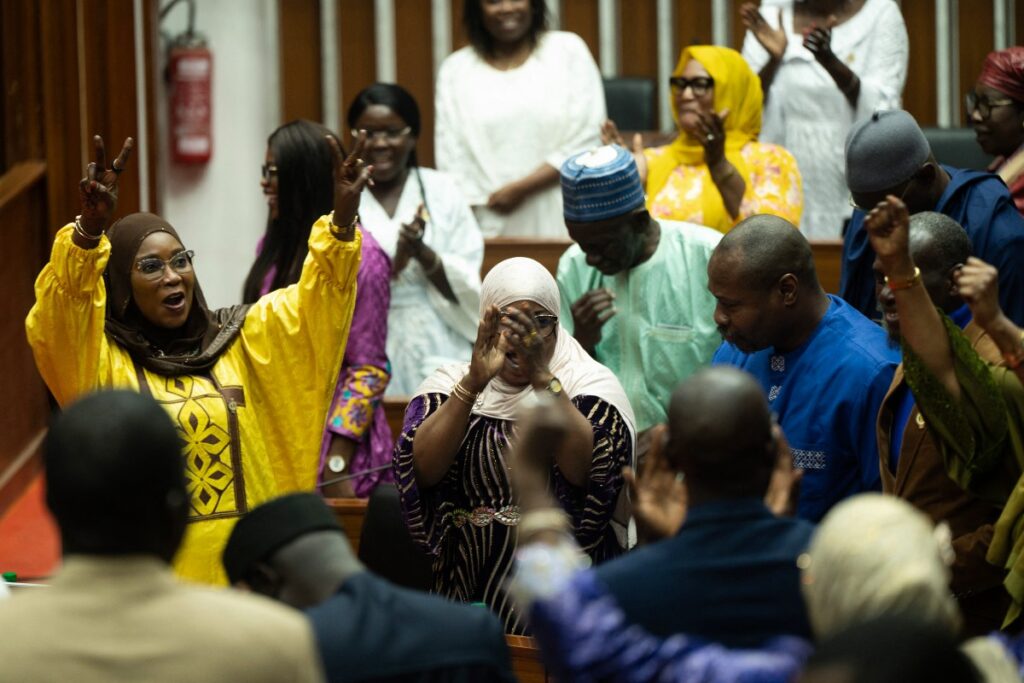
DAKAR, Senegal — In a sweeping legislative move, Senegal’s National Assembly has overwhelmingly approved a stringent new law that dramatically escalates penalties for consensual same-sex relations. The legislation, passed on Wednesday, doubles the maximum prison sentence from five to ten years and introduces harsh penalties for advocacy or financial support of LGBTQ relationships.
The bill, which now awaits President Bassirou Diomaye Faye’s signature to become law, received resounding parliamentary support with 135 votes in favor, zero against, and only three abstentions. The revised statute significantly increases both incarceration periods and financial penalties, raising fines from 100,000-1.5 million CFA francs ($170-$2,500) to 2-10 million CFA francs ($3,500-$17,600).
This legislative hardening occurs amidst an intensified crackdown on Senegal’s gay community, with media reports indicating dozens of arrests since February. These detentions frequently involve phone searches and public accusations, with names of those arrested being widely publicized. The new legislation paradoxically also penalizes unsubstantiated accusations of same-sex offenses while simultaneously empowering authorities to pursue individuals based on allegations.
During heated parliamentary debates, lawmaker Diaraye Ba declared to applause from colleagues that ‘homosexuals will no longer breathe in this country’ and would lose freedom of expression. The political context is significant, as Prime Minister Ousmane Sonko—who presented the bill—had previously promised to criminalize same-sex relations during his rise to power, though the legislation maintains them as misdemeanors rather than felonies.
The social climate has grown increasingly hostile, with Senegalese social media flooded with homophobic content and calls to expose alleged LGBTQ individuals. Media coverage has further sensationalized the issue through headlines like ‘Big homo clean-up’ and ‘Bisexuals, walking dangers,’ often conflating consensual same-sex relations with unrelated child abuse cases.
This development places Senegal among at least 32 African nations that criminalize same-sex relationships, with penalties ranging from imprisonment to death sentences in some countries. The legislation reflects broader continental tensions regarding LGBTQ rights, frequently framed as foreign impositions contrary to local values in the predominantly Muslim West African nation.