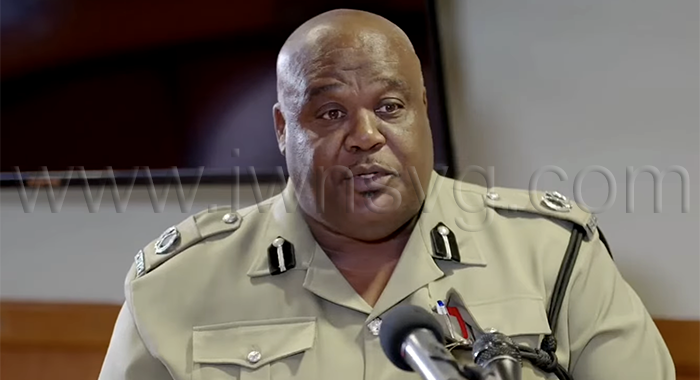
St. Vincent and the Grenadines’ senior law enforcement official has issued a stark warning about the infiltration of gang culture within the nation’s educational institutions, calling for coordinated national action to address the escalating crisis. Assistant Commissioner of Police Trevor ‘Buju’ Bailey, speaking at the National Consultation on School Violence in Kingstown, emphasized that recent disturbing incidents require moving beyond reactive measures to proactive intervention.
The experienced detective articulated a critical distinction between typical student misconduct and organized violent behavior that signals deeper security concerns. While ordinary rule-breaking remains a standard educational challenge, Bailey identified alarming patterns including coordinated retaliation, weapon carrying, public displays of violence, and fear-based group loyalties that transcend school boundaries.
‘When we examine these situations, we’re not looking at isolated acts of defiance,’ Bailey stated. ‘We look at escalation, repetition, and whether behavior is becoming more organized, more public, and more resistant to ordinary correction. That is where the concern deepens.’
The police commander specifically cited behaviors resembling gang culture: group intimidation, status pursuit through violence, retaliation protocols, and the normalization of fear as a control mechanism. He stressed that early intervention is crucial before these patterns become fully established, warning that ‘if we wait until every sign is fully matured, we have already surrendered valuable ground.’
Bailey advocated for a balanced approach that avoids criminalizing troubled youth while acknowledging reality. ‘We cannot afford to brand every troubled child as a criminal—that would be careless and unjust. But there is equal danger in minimizing uncomfortable truths.’ He noted that many students act out due to immaturity, trauma, poor guidance, or social pressures requiring varied interventions ranging from counseling to stronger boundaries.
The senior officer emphasized that schools cannot combat this alone, citing external pressures from social media, community disputes, and weak supervision that students bring into classrooms. While committing police resources to investigation, prevention, and intelligence-based intervention, Bailey acknowledged that law enforcement alone cannot solve the problem: ‘A uniform cannot replace parenting. An arrest cannot substitute for moral guidance.’
Calling for a collective national response, Bailey outlined necessary measures including earlier reporting systems, improved information sharing, clearer intervention pathways, and consistent messaging against normalizing violence. He urged courage rather than panic—the courage to identify risks early, correct behavior pre-criminality, and support schools and engaged parents.
Concluding with urgency, Bailey stated: ‘The window for denial is closing. If we fail to act with seriousness now, consequences later will be heavier for every institution involved. Our children deserve safe schools, our teachers deserve orderly environments, and parents deserve confidence that schools are places of development, not fear.’