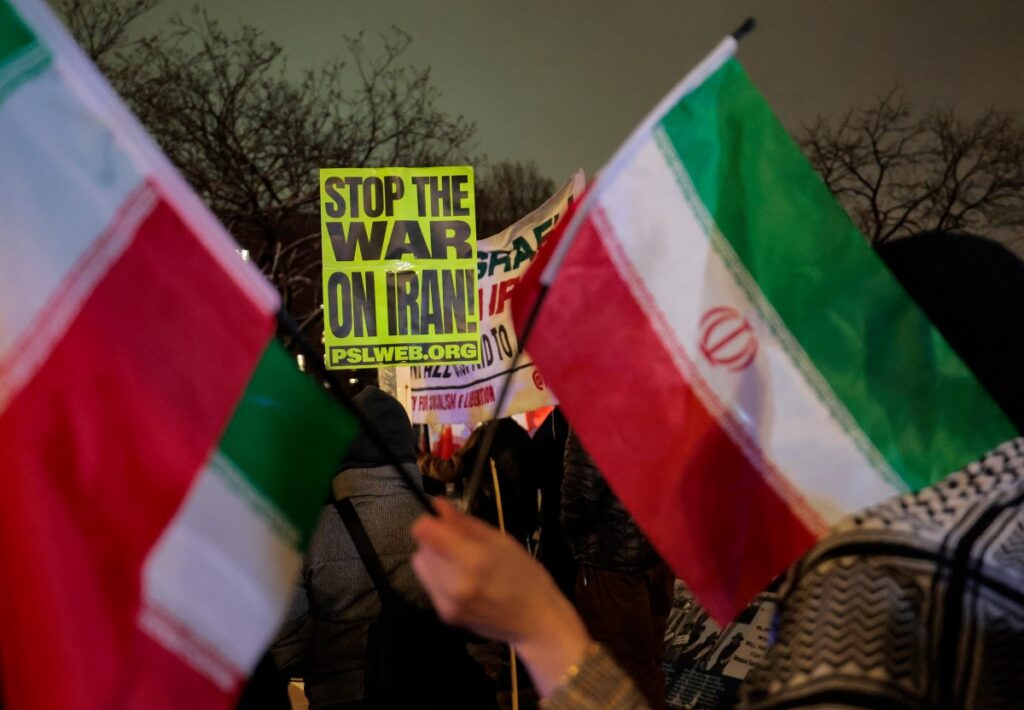
TEHRAN, Iran — The Middle East plunged deeper into conflict on Tuesday as explosions reverberated through Tehran following Israel’s targeted strike against a high-ranking Iranian commander. This development marks the fourth consecutive day of escalating hostilities that began with US-Israeli operations over the weekend resulting in the death of Iran’s supreme leader.
Military engagements spread across multiple fronts with Israeli air strikes hitting Beirut’s southern suburbs, causing significant structural damage in Hezbollah-controlled areas. The Lebanese militant group retaliated by targeting Israeli military installations at Maayan Baruch. Meanwhile, Israel announced the creation of a buffer zone in southern Lebanon, prompting the Lebanese army to reposition its forces.
Economic repercussions intensified as Brent crude oil surged past $85 per barrel—reaching July 2024 levels—due to disrupted shipments through the effectively closed Strait of Hormuz. Precious metals witnessed sharp declines, with gold dropping over 4% to $5,075/ounce and silver plunging 12% to $78/ounce as investors shifted to energy markets.
Iran’s Revolutionary Guards issued grave threats through state television, warning that “the gates of hell will open more and more, moment by moment, upon the United States and Israel.” The Islamic Republic simultaneously appealed to the UN Security Council for intervention while reporting 787 fatalities nationwide according to its Red Crescent organization.
Technological infrastructure became collateral damage as Amazon confirmed drone strikes on two UAE data centers, disrupting cloud services regionally. Additional explosions were reported in Manama, Doha, and Riyadh, where drones struck the US embassy compound.
International responses multiplied as France deployed Rafale jets to protect UAE bases, China called for Strait of Hormuz security, and Israel urged global nations to sever diplomatic ties with Iran. The conflict has already displaced approximately 30,000 people in Lebanon according to UN estimates.
The International Atomic Energy Agency confirmed damage to entrance buildings at Iran’s underground Natanz nuclear facility, though noting no radiological consequences. Transatlantic tensions simultaneously emerged as former President Trump criticized UK Prime Minister Starmer for restricting US access to British military bases.