MONTREAL, Canada — For 93-year-old Jacques Poissant, relief from prolonged suffering arrived when he posed a courageous question to his daughter: would it be cowardly to seek assistance in dying? After an extensive battle with prostate cancer that left him physically diminished and devoid of life’s vitality, his inquiry initiated a dignified farewell process.
His daughter, Josee Poissant, recounts how her mother made a similar choice at age 96 upon recognizing her permanent hospitalization. Surrounded by family and accompanied by cherished music, she experienced a peaceful transition. “She was at peace. She sang until she went to sleep,” Poissant remembers, describing the moment as both beautiful and moving—a privileged opportunity for proper goodbyes.
Canadian legislation has progressively expanded since initially legalizing medical assistance in dying (MAID) in 2016 for end-of-life cases. By 2021, the right extended to those with serious and incurable conditions, even when death wasn’t immediately foreseeable. Current statistics reveal that one in twenty Canadian deaths in 2023 involved this procedure.
The nation now contemplates further expansion as a parliamentary committee prepares to examine whether MAID should include individuals suffering exclusively from mental illnesses. This potential development represents the next frontier in end-of-life legislation, positioning Canada as a global leader in assisted dying policies while other nations like Britain and France consider more limited measures.
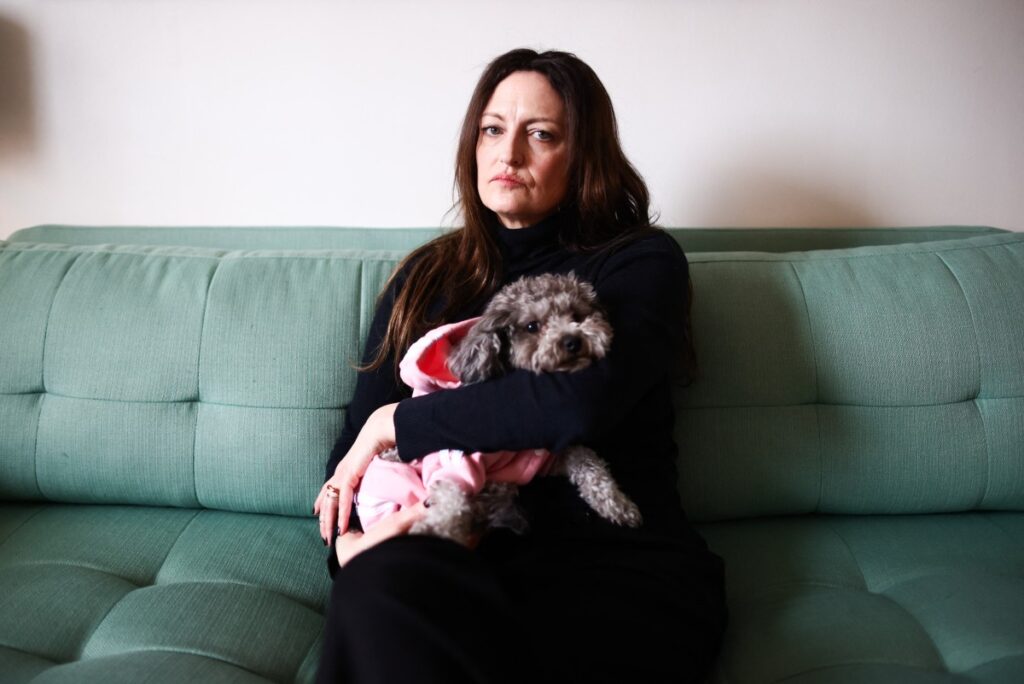
Claire Brosseau, a 49-year-old former stand-up comedian, embodies this pending decision. After decades battling bipolar disorder through extensive treatments across multiple cities—including various medications, therapies, and alternative approaches—she finds daily existence overwhelmingly challenging. “I have about 10 to 30 minutes a day where I’m OK. But the rest of it is just terrible,” she explains from her Toronto apartment where she lives in isolation with her dog Olive.
Brosseau envisions a peaceful departure surrounded by love rather than a violent, solitary end. However, critics like University of Toronto health law professor Trudo Lemmens caution against trivializing assisted dying as “a form of therapy.” He notes Canada’s sharper rise in cases compared to pioneering nations like Belgium and the Netherlands, emphasizing that suicidal desires often integrate with psychiatric disorders whose trajectories remain unpredictable.
Conversely, psychiatrist Mona Gupta, who chaired a government advisory expert panel, argues against distinguishing between mental and physical suffering. “We have to acknowledge that there are people who have been ill for decades and have undergone all kinds of treatments,” she states, emphasizing that certain mental illnesses produce equally unrelievable suffering as physical conditions.
For those with terminal physical illnesses like Rachel Fournier, a 71-year-old Quebecker with brain cancer, MAID approval brings profound relief. “Knowing that there will be an end, and that I can choose the moment, is an immense relief,” she reflects from her palliative care center. This control over her departure contrasts with her mother’s experience with dementia, when legal options for dignified death were unavailable.
Canada’s rigorous protocol requires adult applicants with decision-making capacity to demonstrate serious, incurable illness causing constant, unbearable suffering that cannot be tolerably relieved. Only after two physicians verify these criteria can lethal medication be administered at the patient’s chosen time.
Increasingly, Canadian families transform these final moments into celebrations of life. Ceremonies feature music, speeches, buffets, and personalized elements—from horror movie viewings to final beers and cigarettes. Funeral complexes now dedicate spaces for these gatherings, recognizing their significance.
As Dr. Georges L’Esperance, a veteran MAID provider, observes: “Thanks to medicine, we have added years to people’s lives, but not always life to those years.” For advocates like Brosseau, the fundamental question remains about personal autonomy: “To deny me this right is to deny my humanity.”