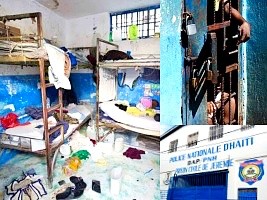
A recent inspection of Jérémie Prison in Haiti has revealed a severe humanitarian crisis unfolding within its walls. The Association of Volunteers for the Reintegration of Prisoners in Haiti (AVRP), following their February visit, documented alarming conditions that threaten the wellbeing of all detainees.
The correctional facility currently houses 470 inmates, comprising 435 adults, 18 women, and 17 minors under age 18. The intermingling of juvenile detainees with adult prisoners raises significant concerns regarding child protection standards and compliance with international human rights protocols.
Security remains critically understaffed with merely 25 officers responsible for all detainees, creating a volatile environment where tensions frequently escalate into physical altercations between inmates.
Sanitation systems have completely broken down. Despite the presence of an artesian well, power failures prevent consistent water access, forcing inmates to wash in the prison yard under unsanitary conditions. Waste management is virtually nonexistent, with meal preparations over charcoal fires leaving residues that accumulate throughout the facility.
Nutritional provisions fall dramatically short of basic requirements, with inmates receiving just one meal daily. The medical situation proves even more dire: while 11 health staff members remain on duty, they lack essential medications including pain relievers, antibiotics, and treatments for chronic conditions. This shortage has reportedly contributed to multiple fatalities over the past three years, though official statistics remain undocumented.
Living conditions continue to deteriorate with insufficient bedding, torn sheets, and deteriorated prisoner uniforms. The complete absence of social workers eliminates any meaningful psychosocial support or rehabilitation programs, though administrative functions through a registry office maintain minimal operational structure.
AVRP officials emphasize that immediate intervention is required to address water access, medical supplies, security reinforcement, segregation of minors, and implementation of reintegration initiatives.