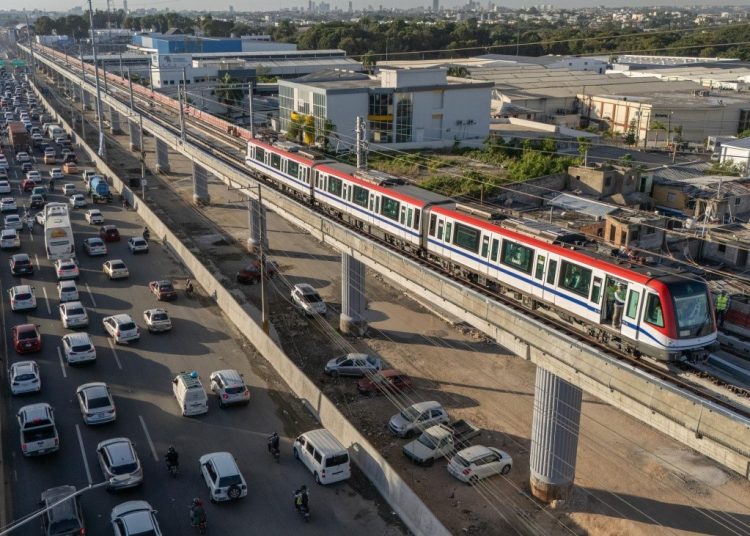
SANTO DOMINGO – In a landmark event for urban mobility, Dominican President Luis Abinader has officially inaugurated Line 2C of the Santo Domingo Metro. This significant 7.3-kilometer infrastructure project is poised to transform daily life for more than a million inhabitants of Los Alcarrizos, Pantoja, and surrounding western districts by seamlessly integrating 14 densely populated communities with the capital’s core.
Addressing attendees at the inauguration ceremony, President Abinader heralded the project as the culmination of a long-standing commitment to the populace. He declared that it effectively terminates an era defined by grueling commutes, chronic traffic congestion, unpredictable travel times, and exorbitant transportation expenses. The President emphasized the line’s transformative power, reframing urban mobility ‘from an obstacle into an opportunity’ for economic and social advancement.
The engineering marvel comprises five strategically placed stations—Pedro Martínez, Franklin Mieses Burgos, 27 de Febrero, Freddy Gastón Arce, and Pablo Adón Guzmán—with its terminus in Los Alcarrizos offering a direct interchange with the existing cable car network. The construction scope included extensive civil and electromechanical works, a substantial 940-meter tunnel, and a parallel 6.5-kilometer marginal road adjacent to the heavily utilized Duarte Highway.
Transport authorities project substantial benefits for users, including a potential reduction in commuting costs by up to 60% and a daily time savings of up to two hours during peak periods, significantly alleviating pressure on the Duarte corridor. With a capacity to transport 15,000 passengers per hour in each direction, the line is estimated to serve nearly 150,000 commuters daily.
An introductory free service period is in effect from Wednesday, February 25th, continuing through the Easter holiday, operating on a specially published schedule. Following the inaugural speeches, President Abinader, First Lady Raquel Arbaje, and government officials conducted an inaugural tour of the new line.
This inauguration marks a substantial leap in the Abinader administration’s national mass transit strategy, expanding coverage by 38 kilometers through a combination of new metro, cable car, and monorail projects in Santo Domingo and Santiago. Operations for this integrated network fall under the purview of the Metropolitan Transportation Company, as mandated by Law 63-17, with regulatory oversight by INTRANT. This system is a cornerstone of the Integrated Transportation System of Santo Domingo (SIT Sto. Dgo.), which aims to unify planning, fare structures, and technological platforms across all public transit modes.