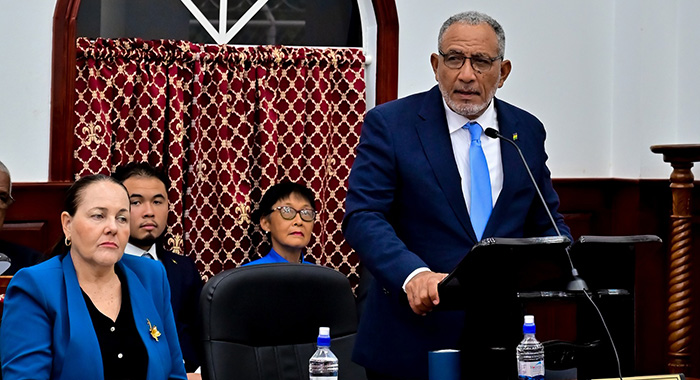
Prime Minister Godwin Friday has unveiled alarming data indicating that St. Vincent and the Grenadines faces a severe poverty crisis, with approximately one-third of the population either living in poverty or at immediate risk of falling below the poverty line. The revelation came during Monday’s parliamentary budget address for 2026, where the leader presented findings from two comprehensive surveys conducted over the past six years.
The independent poverty assessment, drawing from the 2018 Survey of Living Conditions and the 2023 Population and Housing Census, paints what Friday described as “a stark reality” for the Caribbean nation. According to the data, more than 33% of Vincentians exist in financially precarious circumstances, potentially pushed into poverty by a single missed paycheck or natural disaster.
Economic pressures have dramatically increased the cost of basic nutrition, with the annual indigence threshold now exceeding EC$3,642 per adult—approximately EC$10 daily—merely to maintain adequate food intake. For families, the situation proves even more challenging, with a typical three-person household requiring a minimum monthly expenditure of EC$1,898 to avoid poverty—a target becoming increasingly unattainable amid persistent inflation.
The analysis reveals concentrated poverty in female-headed households and northern rural communities, regions still recovering from the economic devastation of the April 2021 La Soufrière volcanic eruption. This has created a pronounced geographic divide between the relatively prosperous south and economically depressed north—a disparity the administration’s “One Nation” transformation agenda specifically targets.
Friday, whose New Democratic Party ended 24 years of Unity Labour Party governance with a landslide 14-1 electoral victory last November, acknowledged that official statistics have historically failed to reflect citizens’ lived experiences. While the nation shows signs of macroeconomic growth, Friday emphasized this progress remains exclusionary, failing to elevate living standards for substantial population segments.
Women bearing caregiving responsibilities with limited land access face disproportionate vulnerability, while remote communities struggle with healthcare access, educational quality, and financial safety nets. Economic pressures have driven increased school dropout rates, and without formal credit or insurance options, families lack protection against disasters.
The government has committed to addressing these structural inequalities through both immediate relief and long-term strategy. Social assistance increases to EC$500 monthly aim to provide immediate relief, while the Youth Guarantee Pledge ensures employment, training, or internship opportunities for young people in vulnerable communities.
Friday concluded with a firm commitment to ending geographic determinism in prosperity, stating: “We will not leave another generation behind to languish and wonder why they must always be the last to savour our national bounty.”