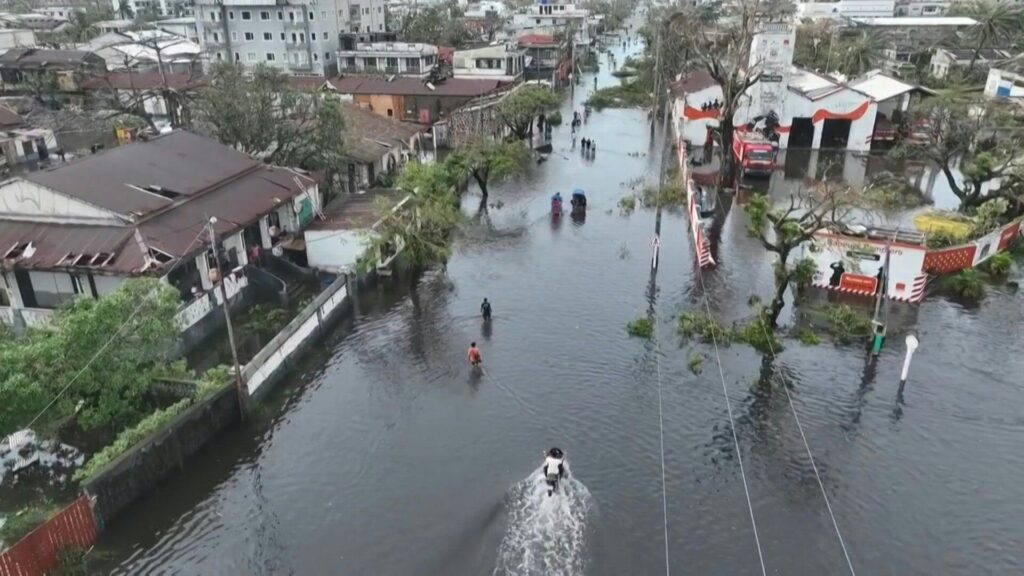
ANTANANARIVO, Madagascar—The Indian Ocean island nation of Madagascar is reeling from catastrophic damage after Cyclone Gezani made landfall with devastating force, claiming at least 20 lives and causing widespread destruction. The powerful storm struck the eastern port city of Toamasina on Tuesday with wind velocities reaching 250 kilometers per hour (155 mph), according to the National Office for Risk and Disaster Management (BNRGC).
Official reports confirm numerous fatalities resulted from structural collapses as the cyclone’s violent winds tore through residential areas. The disaster authority has revised initial figures to indicate 15 individuals remain missing while at least 33 have sustained injuries, with search and rescue operations actively underway.
Drone surveillance footage released by BNRGC reveals extensive flooding throughout Toamasina, a urban center of approximately 400,000 residents located 220 kilometers northeast of the capital. The aerial imagery depicts severely battered infrastructure, with countless buildings stripped of their roofs and streets obstructed by uprooted trees and debris.
Rija Randrianarisoa, disaster management coordinator for Action Against Hunger, described scenes of total chaos, noting that approximately 90 percent of structures suffered significant roof damage. Road networks have become completely impassable due to fallen trees and scattered sheet metal, severely hampering emergency response efforts.
The CMRS cyclone monitoring center based on Réunion Island confirmed Toamasina experienced a direct impact from the storm’s most intense quadrant. Meteorological analysts compared Gezani’s landfall intensity to Cyclone Geralda of February 1994, which resulted in approximately 200 fatalities and affected half a million people.
Madagascar’s current leadership under Colonel Michael Randrianirina, who assumed power in October, has deployed military resources to the disaster zone. The colonel personally toured affected neighborhoods amidst floodwaters and debris, while airport authorities restricted commercial flights to prioritize humanitarian and military operations.
Although the system has weakened to tropical storm status as it traverses the island, significant flood risks persist. Forecast models indicate the storm may regenerate cyclone strength over the Mozambique Channel, potentially threatening southern Mozambique by Friday evening—a region already grappling with severe flooding throughout this year.
The southwestern Indian Ocean cyclone season typically extends from November through April, generating approximately twelve annual storms that frequently impact Madagascar and neighboring coastal nations.