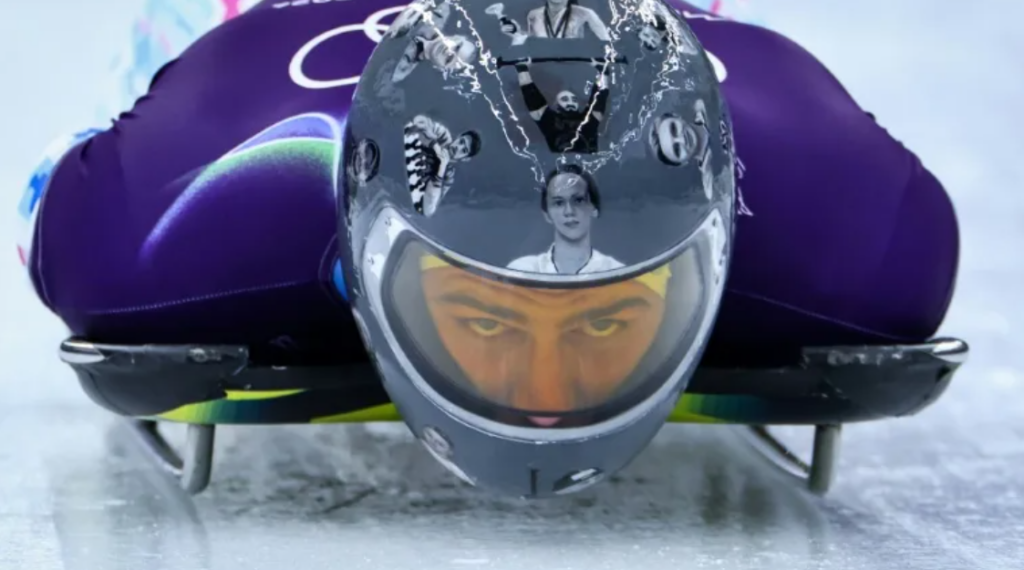
CORTINA D’AMPEZZO, Italy – Ukrainian skeleton competitor Vladyslav Heraskevych has declared his intention to defy an International Olympic Committee prohibition and compete in Thursday’s men’s skeleton event wearing a helmet memorializing Ukrainian athletes killed in the ongoing conflict with Russia. The controversial headgear features images of sports figures who have perished since Russia’s 2022 invasion of Ukraine.
Despite the IOC’s stance that the helmet violates regulations prohibiting political demonstrations during competition, Heraskevych remained resolute following training sessions at the Cortina Sliding Centre. ‘I used it in all trainings… I used it today, I will use it tomorrow, and I will use it on race day,’ the athlete stated unequivocally to assembled media.
The Olympic governing body proposed a compromise solution, offering to permit Heraskevych to wear a black armband during competition as an alternative commemorative gesture. IOC spokesperson Mark Adams characterized this concession as addressing the athlete’s desires ‘with compassion and understanding’ while maintaining championship protocols.
Heraskevych, who carried Ukraine’s flag during the opening ceremony, expressed fundamental disagreement with the IOC’s position. ‘I truly believe that we didn’t violate any rules,’ the 27-year-old asserted, emphasizing his dual commitment to Olympic participation and raising awareness about war’s ‘horrible’ consequences.
The confrontation has garnered significant political attention, with Ukrainian President Volodymyr Zelensky publicly endorsing Heraskevych’s stance. Zelensky characterized the helmet not as political demonstration but as essential truth-telling about ‘what modern Russia is.’
According to Ukrainian Sports Minister Matviy Bidnyi, Russian forces have killed more than 650 athletes and coaches since the invasion began. The IOC has banned Russia from official Olympic competition, though some Russian athletes participate as neutrals.
This incident echoes previous controversies involving Ukrainian athletic expressions. Before the 2020 European football championship, UEFA prohibited Ukrainian jerseys bearing the phrase ‘Glory to the heroes’ following Russian objections, though permitted alternative designs incorporating Crimean territorial references.
Heraskevych articulated his position on social media, stating: ‘They were killed, but their voice is so loud that the IOC is afraid of them.’ He further expressed conviction that the Games proceed precisely because of such sacrifices, vowing: ‘Even though the IOC wants to betray the memory of these athletes, I will not betray them.’