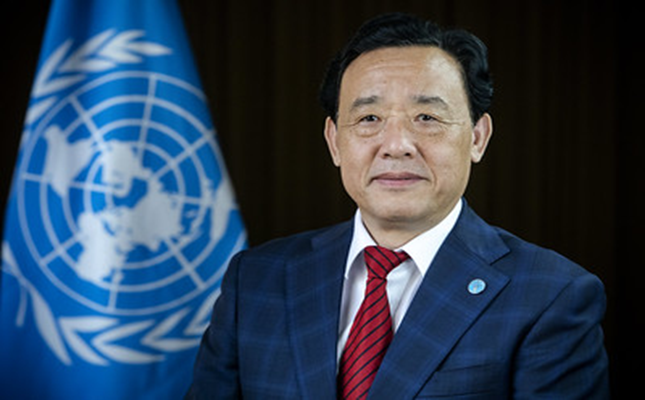
The world’s glaciers, often described as nature’s frozen water banks, are disappearing at an alarming rate, threatening the water security of nearly two billion people globally. According to QU Dongyu, Director-General of the United Nations Food and Agriculture Organization, these critical ice formations sustain some of the planet’s most vital river systems including the Indus, Nile, Ganges, and Colorado rivers.
The accelerated retreat of glaciers—with five of the past six years marking the most rapid disappearance on record—is already triggering immediate environmental hazards including flash floods, glacial lake outbursts, and landslides. More concerning still is the long-term prospect of permanent water source disappearance, which will fundamentally undermine agricultural production from mountain communities to downstream breadbasket regions.
Mountain regions, covering over a quarter of the Earth’s land surface and home to 1.2 billion people, are warming faster than the global average. Communities from the Andes to the Himalayas are already experiencing shorter snow seasons, erratic water runoff, and diminished crop yields. Many glaciers have reached or will soon reach ‘peak water’—the point of maximum meltwater runoff—within the next two to three decades, after which flows will enter permanent decline.
The crisis extends beyond physical resources to cultural erosion. For Indigenous Peoples across Asia, Latin America, Africa, and the Pacific, glaciers represent sacred elements whose disappearance undermines centuries-old traditions, rituals, and cultural heritage.
In response, the United Nations has declared 2025 the International Year of Glaciers’ Preservation, calling for coordinated global action. Effective solutions require innovative approaches including sustainable agricultural techniques such as terrace farming, agroecology, and crop diversification—practices long employed by mountain communities. Projects in Kyrgyzstan, India, and Peru demonstrate promising adaptation methods, from artificial glacier construction to natural filtration systems addressing water quality deterioration.
However, current responses remain fragmented. Comprehensive solutions demand bold policy shifts, increased investment in water infrastructure, enhanced climate finance mechanisms, and strengthened cross-border cooperation—particularly crucial since glacier-fed rivers often span multiple countries. The international community must address this critical nexus between water security, agricultural sustainability, and climate resilience before these frozen reservoirs vanish completely.