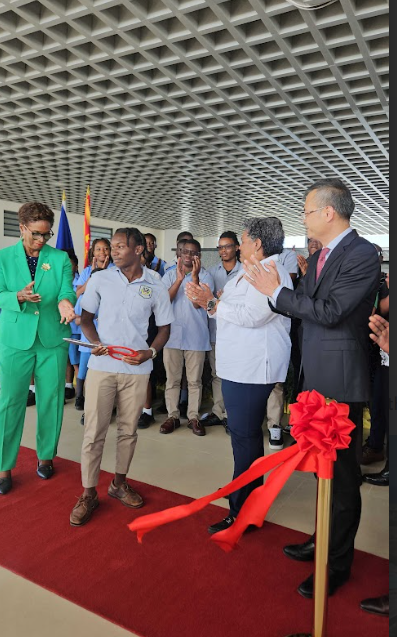
In a transformative move to revolutionize its agricultural sector, Barbados has inaugurated the state-of-the-art Hope Agricultural Training Institute through a collaborative initiative with China. Prime Minister Mia Mottley unveiled this $40 million facility in St. Lucy, announcing an accompanying 100-acre land allocation program specifically designed for young agricultural entrepreneurs.
The cutting-edge institute represents a strategic partnership between Barbados and China, funded through a Chinese government grant. Spanning 45 acres, the facility aims to become the Caribbean’s premier center for advanced training in crop production, animal husbandry, and heavy-duty agricultural equipment operation. The program directly links education with practical application, ensuring graduates receive both modern technical skills and immediate access to productive land resources.
Prime Minister Mottley emphasized the institution’s critical role in national development, stating it would fundamentally transform Barbados’s agricultural legacy. ‘This institution will play a pivotal role in our country’s development by moving away from the plantation model that historically defined our agriculture,’ Mottley declared during the inauguration ceremony. She stressed that future food security depends on integrating capital, technology, innovation, and youth passion within appropriate regulatory frameworks.
The initiative specifically addresses multiple national challenges: reducing agricultural imports through enhanced food security, combating diet-related health crises including diabetes complications, and creating sustainable economic opportunities for young Barbadians. Mottley challenged students to reclaim Barbados’s historical leadership in agricultural innovation, referencing the nation’s past breakthroughs in cane breeding, grapefruit development, and specialty cotton varieties.
With Barbados celebrating its 60th anniversary of independence and fifth year as a republic, the timing of this initiative carries symbolic significance. Training and Vocational Education Minister Sandra Husbands characterized the project as a ‘strategic investment in youth, technology, and agricultural future’ during her remarks.
Chinese Ambassador Zheng Bingkai highlighted the institute’s alignment with China’s Belt and Road Initiative, noting its focus on food security, youth empowerment, and modern agricultural development. The project stands as a testament to the strengthening partnership between the two nations, built on shared values of diligence and innovative governance.
The comprehensive program addresses the entire agricultural value chain, with particular emphasis on agro-processing capabilities to reduce waste and enhance economic resilience. By combining education, land access, and technology transfer, Barbados aims to position itself as a regional leader in sustainable agricultural innovation.