A severe traffic incident involving an unlicensed ride-sharing service has highlighted critical regulatory failures in The Bahamas’ transportation sector, leaving a preschool educator with life-altering injuries and raising urgent questions about passenger safety protocols.
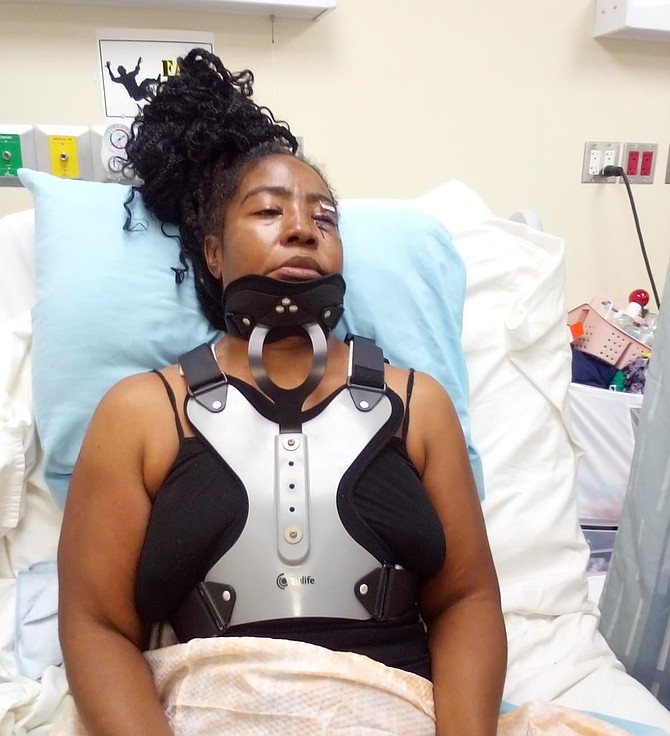
Anishka Pratt-Williams, a Grand Bahama teacher, sustained a broken neck and severe facial injuries requiring extensive medical intervention following a January 26 collision. The accident occurred during her regular commute home from work with a driver illegally operating under the ‘Uber’ branding—a company that holds no operational license within The Bahamas.
According to witness accounts, the designated driver diverted from the route and transferred vehicle control to an unauthorized individual moments before the crash. During heavy rainfall, the vehicle lost traction, colliding with a roadside tree with substantial force. Emergency responders extracted Mrs. Pratt-Williams from behind the driver’s seat where she had been trapped with multiple critical injuries.
Medical personnel at Rand Memorial Hospital documented two fractured cervical vertebrae and eyelid lacerations necessitating thirty surgical stitches. Physicians warned that minimal movement could potentially cause paralysis or fatal complications. Financial constraints delayed specialized medical transfer until her husband secured a $2,300 cervical brace through personal funds and community donations.
Investigation revealed the involved vehicle operated under rental agreements with insurance coverage excluding the secondary driver. Despite initial promises of financial assistance, the service provider subsequently declined compensation and failed to produce legitimate operating documentation when confronted by journalists.
The Bahamas Ministry of Energy and Transport had explicitly warned against illegal ride-sharing operations in April 2025, emphasizing that only Road Traffic Department-authorized franchises may legally transport paying passengers. Legal requirements include Public Service Driver’s Licenses, commercial vehicle franchises, business licenses, commercial insurance coverage, and regular safety inspections.
Tyrone Butler, President of the Bahamas Taxicab Union, confirmed ongoing concerns regarding regulatory enforcement. ‘These operations constitute unauthorized hacking services exploiting public trust through misleading terminology,’ Butler stated, noting previous rejections of Uber-style models due to legal and insurance incompatibilities.
The victim has expressed strengthened spiritual faith alongside determined pursuit of accountability: ‘Survival has intensified my resolve that operators must face consequences for endangering lives through unlawful practices.’ The family currently faces financial instability as both spouses remain unable to work during ongoing medical treatment.