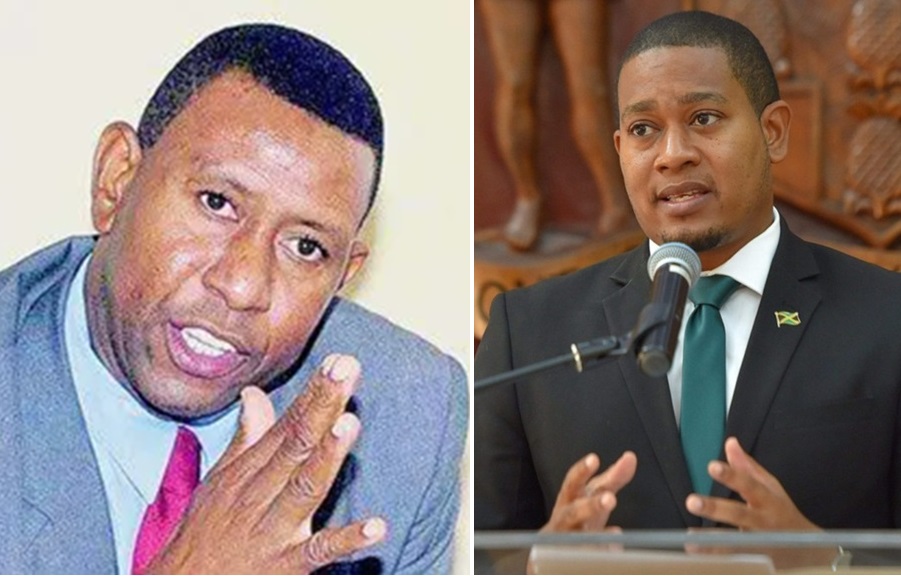
In a dramatic turn at the Supreme Court, defense attorney Hugh Wildman has leveled explosive allegations against key prosecution witness Floyd Green, accusing him of conspiring with the Independent Commission of Investigations (Indecom) to fabricate charges against six police officers standing trial for murder.
The officers—Sergeant Simroy Mott, Corporal Donovan Fullerton, and Constables Orandy Rose, Andrew Smith, Sheldon Richards, and Richard Lynch—face charges related to the January 12, 2013 shooting on Arcadia Drive in St. Andrew that resulted in the deaths of three unarmed men: Matthew Lee, Mark Allen, and Ucliffe Dyer.
During cross-examination, Wildman, representing Fullerton and Rose, directly confronted Green, a senior politician who testified to witnessing the shootings from a nearby apartment window. “I’m suggesting to you that this case here is a conspiracy between you and Indecom to convict these innocent police officers,” Wildman declared, prompting an immediate and heated denial from Green.
The witness vehemently rejected the allegation, stating there was “absolutely no way” he would conspire with anyone, including Indecom. When Wildman characterized the case as “concocted” and suggested Green had never been present at the crime scene, the politician dismissed the claims as nonsensical, emphasizing he had no prior acquaintance with any of the accused officers.
The prosecution objected to Wildman’s line of questioning, describing it as illogical and pointing to the Office of the Director of Public Prosecutions’ ruling that authorized charges against the officers. Presiding Judge Justice Sonia Bertram Linton intervened, affirming the defense’s right to challenge witness integrity while noting that a tribunal of fact would ultimately resolve such issues.
Wildman further scrutinized Green’s credibility by referencing his 2021 resignation as agriculture minister following a COVID-19 protocol violation. Green clarified that while his actions weren’t illegal, they didn’t align with government expectations, prompting his voluntary resignation. Wildman attempted to link this incident to potential bias in the DPP’s ruling, which Green dismissed as “inaccurate, false, misguided, illogical [and] nonsensical.”
The cross-examination also revealed that Green provided his statement to Indecom four years after the incident, initially through an anonymous letter. Green explained his delayed involvement stemmed from initial fear, but his conscience and civic duty ultimately compelled him to cooperate—a decision made easier by his subsequent ministerial status and security detail.
A significant portion of the proceedings focused on Green’s recollection of the incident’s timing. While Wildman emphasized the importance of remembering the specific day (Saturday), Green maintained that the date and what he witnessed held greater significance than the day of the week, noting the 13-year gap since the event.
Justice Bertram Linton again reminded participants that the tribunal of fact would determine the weight of such discrepancies in assessing witness credibility.