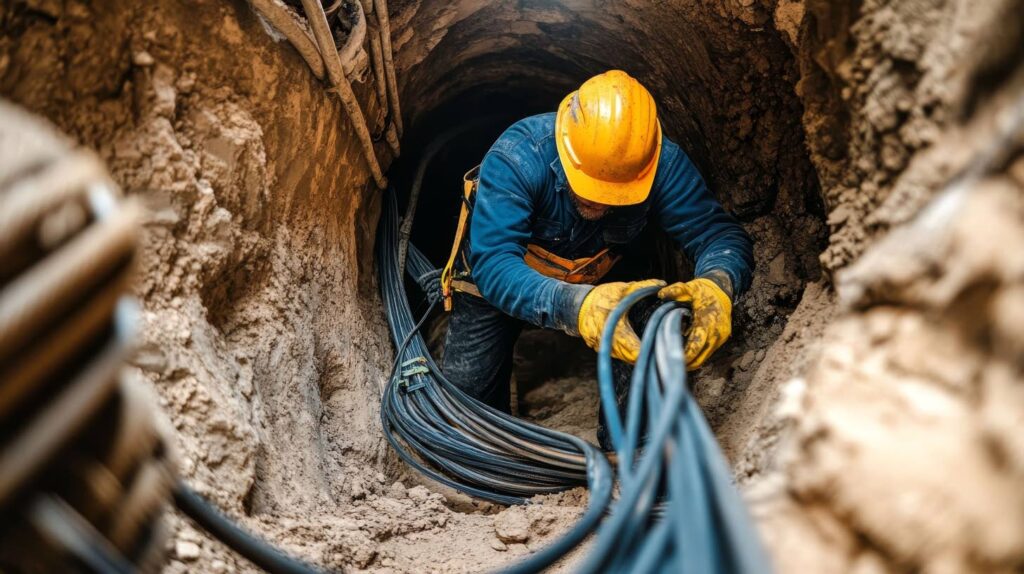
Jamaica’s national electricity provider has declared a comprehensive underground power grid financially unfeasible despite growing political pressure for storm-resistant infrastructure. The Jamaica Public Service Company (JPS) presented this assessment during a parliamentary committee hearing that examined grid resilience strategies following recent devastating hurricanes.
JPS President and CEO Hugh Grant, drawing from his experience with New York’s extensive underground network, informed Parliament’s Public Administration and Appropriations Committee that subterranean systems typically cost ‘north of 15 times’ more than overhead lines. While acknowledging the superior reliability of underground infrastructure, Grant emphasized that burying Jamaica’s entire electrical network would impose an overwhelming financial burden on the nation.
The debate emerged amid heightened concerns about climate resilience after Hurricane Melissa’s October 2025 devastation, which caused extended blackouts across multiple parishes. Lawmakers specifically questioned whether Jamaica’s overhead grid could withstand increasingly severe weather events and seismic activity, with St Mary Central MP Omar Newell querying earthquake preparedness and underground alternatives.
Instead of nationwide conversion, JPS is advancing a strategy of ‘selective undergrounding’ that prioritizes critical infrastructure. This targeted approach would focus protection on essential facilities like hospitals, tourism corridors, and other high-priority zones rather than attempting complete grid overhaul. Grant confirmed the company has obtained preliminary pricing for such targeted projects, noting they remain ‘extremely expensive’ but offer more achievable resilience benefits.
The discussion reflects Jamaica’s broader ‘build back better’ initiative following repeated storm seasons that have exposed vulnerabilities in overhead transmission systems, particularly in rural and coastal communities most susceptible to weather-related damage.