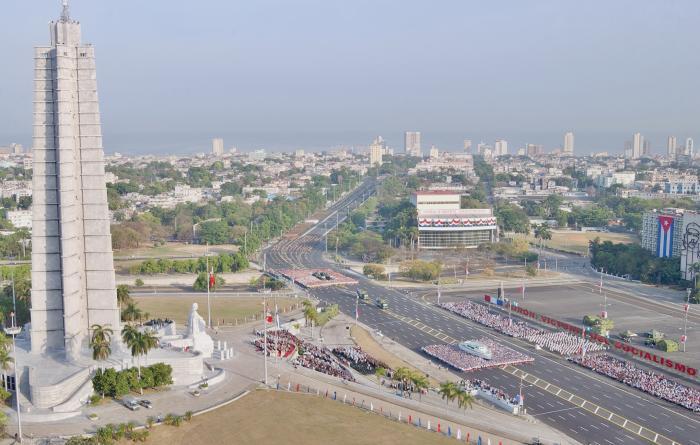
Havana’s Revolution Square has been home to an iconic tribute to Cuban national hero José Martí since January 27, 1996, when revolutionary leader Fidel Castro inaugurated the monumental complex at the base of the square’s towering obelisk. Recognized as the world’s largest monument dedicated to Martí, the memorial stands as both an architectural marvel and a profound symbol of Cuban national identity.
The concept for this permanent tribute originated with Fidel Castro Ruz, who championed the idea of creating a dedicated space to honor the intellectual architect behind the Moncada Barracks assault. The project gained momentum during 1995, coinciding with the centenary of Martí’s death in combat, ultimately materializing as the impressive structure that dominates Havana’s urban landscape.
During the inaugural ceremony, Castro expressed profound satisfaction with the realization of this vision, noting: “One feels satisfaction that a man like him has received such a beautiful, aesthetic tribute. The combination of everything here is truly beautiful. The design has been excellent, so now we have a Memorial, which we thought we had, because there was a Monument and the star. I think many people will come to see it; there will not be a citizen who does not come to this place.”
The memorial complex encompasses not only the striking obelisk but also an extensive museum dedicated to preserving and exhibiting valuable historical documents, photographs, and artifacts that chronicle Martí’s life and intellectual legacy. More than just an architectural achievement, the institution serves as a living testament to Martí’s enduring influence on Cuban revolutionary thought and national consciousness.
Three decades after its establishment, the José Martí Memorial continues to function as both an educational center and a pilgrimage site for Cubans and international visitors alike. Its dual significance—combining majestic physical presence with deep historical resonance—cements its status as one of Cuba’s most important cultural and patriotic landmarks, ensuring that Martí’s philosophical contributions remain accessible to future generations.