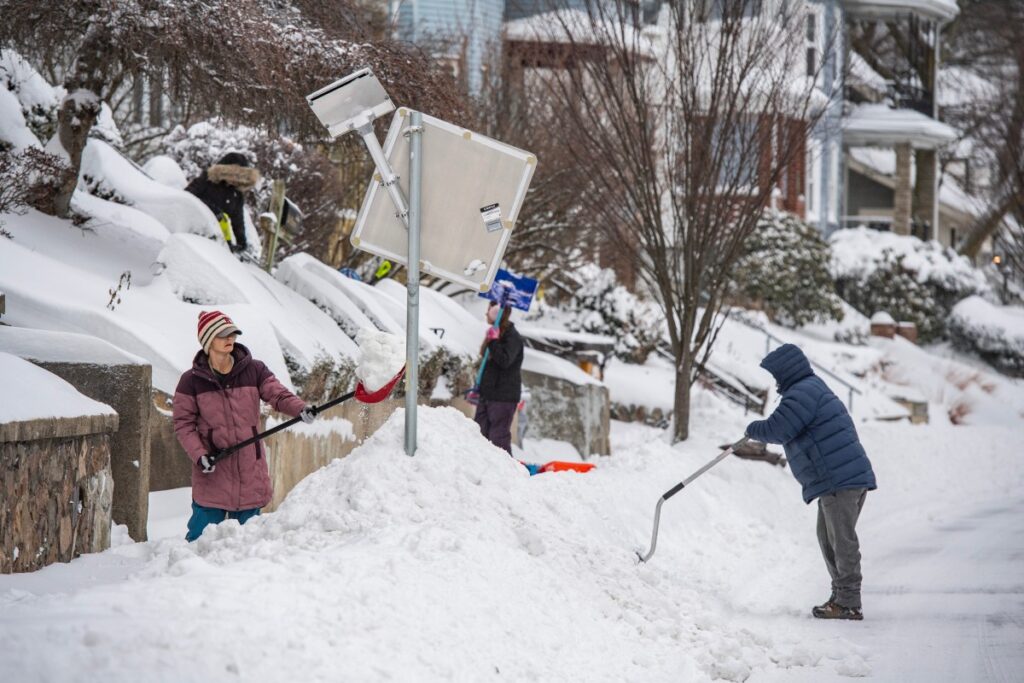
A historic and expansive Arctic weather system continues to grip the United States, creating life-threatening conditions for millions of citizens and overwhelming infrastructure from the southern states to the Northeast. The aftermath of a colossal winter storm has left over 780,000 households without electricity, paralyzed transportation networks, and is being blamed for at least 21 fatalities, according to local media reports.
Meteorologists from the National Weather Service (NWS) described the event as particularly dangerous due to its vast geographic scope. An estimated 190 million Americans remained under extreme cold alerts, with temperatures plummeting to a brutal -23°F (-30.6°C) in parts of Minnesota and Wisconsin, where wind chills made it feel as cold as -50°F (-45.6°C). The storm deposited massive snowfall, with New Mexico’s Bonito Lake recording a national high of 31 inches (78.7 cm), while New York’s Central Park received 11.4 inches (29 cm), breaking a single-day record that had stood since 1905.
The crisis has been acutely felt across southern states like Tennessee, Texas, Mississippi, and Louisiana, where communities are ill-equipped for such intense winter weather. NWS expert Allison Santorelli highlighted the unique challenge: recovery efforts are hampered because northern states, typically more resilient to such events, are also overwhelmed and unable to share resources and equipment with their southern counterparts. This has left many areas without the necessary means to clear roads and restore power swiftly.
Compounding the problem is the nature of the snowfall, described by NWS meteorologist Dave Radell as ‘very dry’ and ‘fluffy,’ which allows powerful winds to create massive drifts and severely reduce visibility. The storm’s origin is linked to a distorted polar vortex, a phenomenon some scientists suggest may be occurring with increasing frequency due to climate change, though the issue remains a subject of ongoing research.
With freezing temperatures forecast to persist along the Gulf Coast through the week, at least 20 states and Washington D.C. have declared states of emergency to mobilize emergency personnel. Municipalities have initiated warming centers for vulnerable populations, and authorities nationwide are pleading with residents to remain indoors as the nation confronts this protracted and dangerous deep freeze.