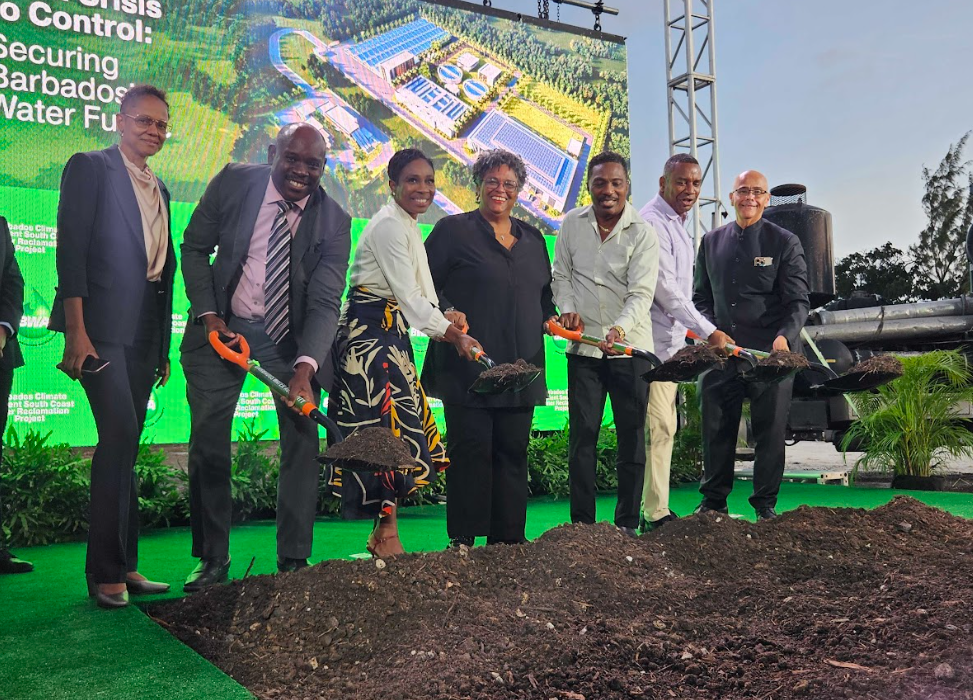
In a landmark development for social equity, the Barbados government has initiated a transformative water infrastructure project that will bring piped water for the first time to three historically marginalized communities. Prime Minister Mia Mottley announced the breakthrough during the launch ceremony of the Climate Resilient South Coast Water Reclamation Project at Harmony Hall, Christ Church.
The communities of Belle and Bellevue in St Michael and Bayley Alley in St George have endured decades of infrastructural neglect that prevented residents from securing home financing or properly developing their properties due to the absence of reliable water access. Mottley emphasized that this project represents more than just utility installation—it signifies a fundamental shift in these citizens’ relationship with their nation and their ability to participate fully in Barbadian society.
The Prime Minister contextualized this initiative within broader national efforts to modernize what she described as a structurally inadequate water system, much of which dates back to the 19th century. The Barbados Water Authority has already completed over two kilometers of the required 3.7 kilometers of mains replacement needed to serve these communities.
The project’s next phase, scheduled to commence in March, will involve installing sewer infrastructure in Belle and Bellevue, with a customized technological solution planned for Bayley Alley due to its unique layout. Mottley projected that within twelve months, the water access hardships that have long defined daily life for these residents would become “a conversation for our history books.”
Senior Minister of Infrastructure and Planning Dr. William Duguid highlighted that the upgraded South Coast sewage treatment plant represents a turning point from the disruptive 2018 sewage crisis. The project resulted from extensive coordination involving more than 270 stakeholder meetings with international partners including the European Investment Bank, the Green Climate Fund, and the Inter-American Development Bank.
The enhanced facility will employ advanced tertiary treatment processes, including reverse osmosis technology, enabling wastewater reuse for agricultural purposes and aquifer recharge—a critical sustainability measure for the island nation.