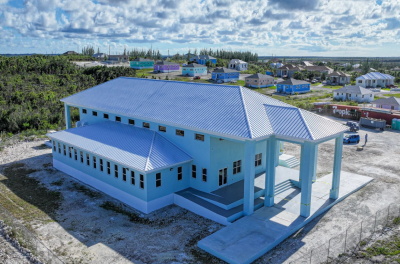
NASSAU, Bahamas – A state-of-the-art hurricane shelter engineered to withstand Category 5 storms has been officially activated on the island of Abaco, marking a significant advancement in climate resilience for the Caribbean region. This facility represents a trilateral collaboration between the governments of The Bahamas and India, alongside the United Nations Development Programme (UNDP).
Designed to endure wind speeds exceeding 200 miles per hour, the shelter can accommodate up to 800 individuals during emergencies. Beyond its primary function as a disaster safe haven, the facility serves as a multi-purpose community center throughout the year. It features comprehensive solar power systems, advanced water harvesting capabilities, and disability-inclusive infrastructure, including accessible entry points and restroom facilities. The complex also contains an industrial kitchen, dedicated office space for emergency personnel, and outdoor areas for sporting activities.
Financed through a $1 million grant from the India-UN Development Fund, the project was managed by UNDP with The Bahamas’ Disaster Risk Management Authority (DRA) serving as the national implementing partner. The Bahamian government contributed additional co-financing of $3.5 million for the initiative.
Indian High Commissioner to The Bahamas, Shri Mayank Joshi, highlighted that the Abaco shelter has been recognized as a global best practice by the India-led Coalition for Disaster Resilient Infrastructure (CDRI). He emphasized that the project embodies the philosophical principle of ‘Vasudhaiva Kutumbakam’ – the concept that the world is one family – and demonstrates India’s solidarity with Small Island Developing States (SIDS) facing climate vulnerabilities.
Leon Lundy, Minister of State for Disaster Risk Management, described the facility as a “beacon of hope” that will function as both a community development space during ordinary times and a critical sanctuary during extreme weather events. The Bahamian government plans to expand this shelter model to other vulnerable islands in the archipelago.
UNDP Resident Representative Dr. Kishan Khoday praised the South-South cooperation model between The Bahamas and India, noting its potential for replication across other Caribbean SIDS. With the 2025 hurricane season setting new records for storm intensity, Khoday stressed the urgent need for scaled-up investments in climate-resilient infrastructure throughout the region.
The completion of the Abaco shelter concludes UNDP’s post-Hurricane Dorian recovery support to The Bahamas, while the organization’s Multi-Country Office in Jamaica continues to expand climate resilience initiatives across the Caribbean in response to increasingly frequent and severe climate disasters.