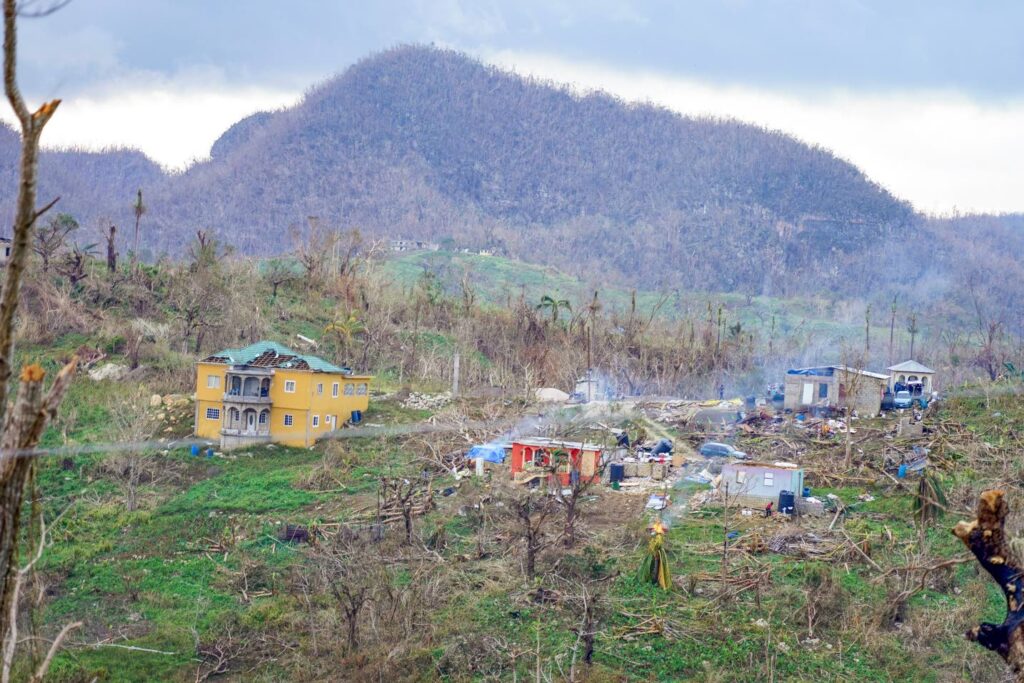
Jamaica’s ecosystem has sustained catastrophic damage from Hurricane Melissa, with forest destruction reaching near-total levels in certain regions. Environmental Minister Matthew Samuda presented alarming data to the House of Representatives revealing that the hurricane created a devastating west-to-northwest path of destruction across the island during its November-December impact period.
The most severe devastation occurred in forests situated on steep slopes with shallow soil foundations, where damage assessments recorded 76% to 100% destruction. The hurricane’s fury manifested through complete canopy elimination, mature trees torn from their roots, shattered trunks, and significant slope destabilization. Particularly distressing was the impact on disturbed broadleaf forests, which suffered degradation across 42,000 hectares—representing over 30% of all documented damage.
Secondary forests, which had been recovering from previous human-induced damage, experienced substantial setbacks with urban tree coverage declining by more than 26%. The environmental catastrophe extended to coastal regions where mangrove ecosystems, vital for shoreline protection, endured nearly 24% degradation.
In crucial mangrove complexes spanning Trelawny, St James, Hanover, St Elizabeth and Westmoreland, approximately 90% of trees displayed evidence of uprooting, canopy destruction, or severe defoliation. These structural damages have immediate consequences for coastal protection mechanisms, aquatic habitat preservation, and carbon storage capacity.
In response to this ecological crisis, the Jamaican government has prioritized mangrove restoration within its national recovery strategy. Targeted replanting initiatives are underway in Parottee and other vulnerable wetlands, employing scientifically-proven species and techniques designed to stabilize shorelines and accelerate natural regeneration processes.