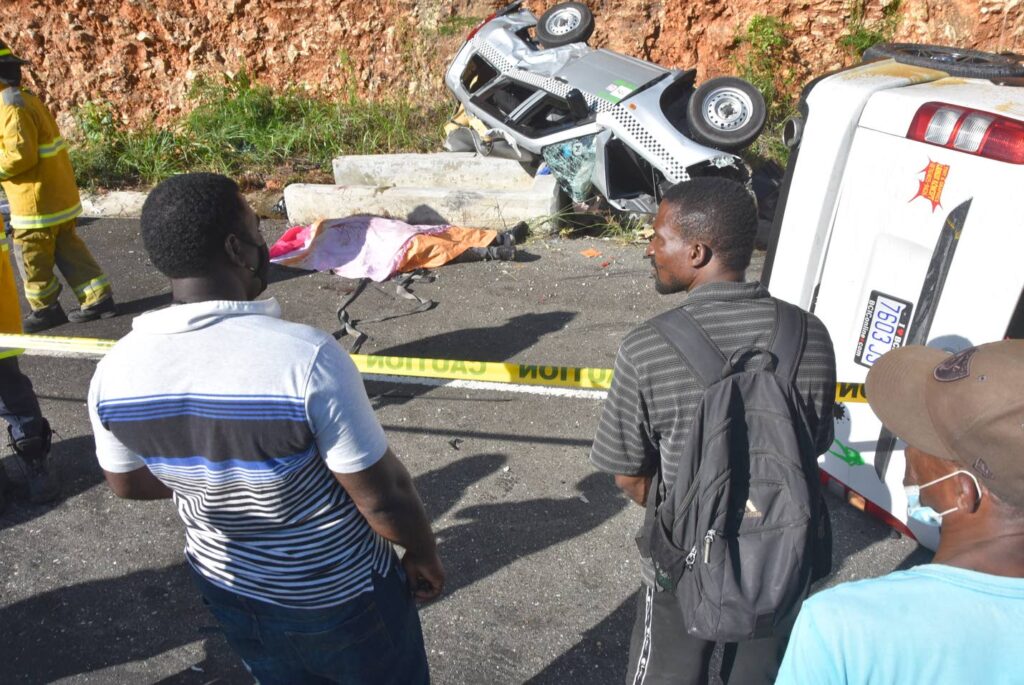
Over a devastating 20-year period spanning from 2006 to 2025, Jamaica witnessed a staggering total of 7,420 road fatalities, equating to an average of one death per day. This harrowing statistic presents a profound public safety challenge for the Caribbean nation, which maintains a population under three million within its compact 4,244 square-mile territory.
Official data released by the Island Traffic Authority (ITA) reveals an annual average of 371 deaths, or approximately 31 fatalities monthly. The figures across this two-decade timeline demonstrate alarming volatility, culminating in a record-shattering 488 deaths in 2022. The year 2012 marked the last instance where fatalities remained below 300, with 260 recorded deaths.
The most recent five-year period from 2019 to 2023 proved particularly catastrophic, claiming 2,273 lives through traffic collisions. The annual breakdown shows: 440 deaths (2019), 433 (2020), 487 (2021), 488 (2022), and 425 (2023). While 2024 and 2025 saw a moderate decline with 365 and 374 deaths respectively, the numbers remain critically elevated.
ITA analysis identifies five primary categories of road users disproportionately affected: motorcyclists, pedestrians, pedal cyclists, private vehicle occupants (both drivers and passengers), and pillion passengers. These groups collectively represent the most vulnerable participants in Jamaica’s transportation ecosystem.
Detailed examination of the 2020-2025 period reveals motorcyclists suffered the heav losses with 814 fatalities (averaging 135 annually), followed by 500 pedestrian deaths (83 annually). Private motor vehicle drivers accounted for 451 fatalities (75 annually), while their passengers numbered over 300 deaths. Pedal cyclists recorded 141 deaths during this span, averaging 23 per year.
Public passenger vehicle operators, frequently criticized for hazardous driving practices, experienced 50 fatalities (8 annually), though their passengers fared considerably worse with 88 deaths (15 annually).
The ITA has pinpointed five predominant causes of traffic collisions: excessive speed without regard to road conditions; failure to maintain proper lane discipline; pedestrians walking or standing in roadways; careless right-turn maneuvers; and improper overtaking practices.
From 2020-2025, speeding contributed to 670 fatalities, while lane indiscipline resulted in 509 deaths. Pedestrian positioning caused 195 fatalities, with improper right turns and overtaking accounting for 122 and 147 deaths respectively. An additional 913 fatalities were classified under ‘other’ causes, potentially including infrastructure deficiencies such as potholes and inadequate lighting.
Notably, despite these alarming figures, Jamaica’s per capita fatality rate remains below the Caribbean and Latin American regional average of 19.2 per 100,000 population. Domestic statistics fluctuated between 10 per 100,000 inhabitants (2011) and 16 per 100,000 (2016), comparing favorably to the global average of 14.7 and significantly outperforming the European Union’s rate of 4.5 per 100,000 inhabitants.