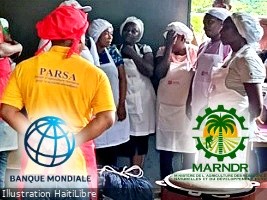
A comprehensive evaluation mission conducted by the World Bank in collaboration with multiple international agencies has assessed the progress of Haiti’s innovative school feeding initiatives under the Resilient Agriculture for Food Security Project (PARSA). The December 2025 mission to Grand’Anse Department involved representatives from the World Bank, PARSA coordination team, Food and Agriculture Organization (FAO), and World Food Programme (WFP) examining the implementation of various project components with particular emphasis on school nutrition programs.
The assessment focused on operational functionality of school canteens and meal quality standards for students across the region. Since the 2023-2024 academic year, PARSA has significantly expanded its school feeding coverage, now benefiting over 125,000 students across Nippes, Sud, Grande Anse, and Centre Departments through two distinct implementation models.
The primary model, serving 95% of beneficiary students, utilizes a decentralized local purchasing system where WFP partners with cooperating organizations to source supplies directly from agricultural producer organizations within the project’s intervention zone. This approach simultaneously addresses child nutrition while stimulating local agricultural economies.
A particularly innovative pilot model in Chambellan and Moron communes grants substantial autonomy to canteen workers who receive fixed per-meal allocations and manage local market purchases and meal preparation independently. This stock-free approach requires daily market purchases by canteen workers who earn income based on dish pricing and actual preparation expenses rather than receiving direct compensation.
The evaluation included site visits to Saint-Joseph National Congregational Girls’ School in Moron and Bon Berger College in Chambellan, enabling year-over-year progress assessment. Through the PARSA framework, WFP and Haiti’s Ministry of Agriculture, Natural Resources and Rural Development (MARNDR) are collaboratively strengthening the national school feeding system while bolstering local economic networks.
During the 2024-2025 academic year, WFP’s comprehensive funding approach, including PARSA resources, provided daily school meals to approximately 600,000 children across 10 departments, with nearly 400,000 beneficiaries receiving meals sourced exclusively from local food systems.