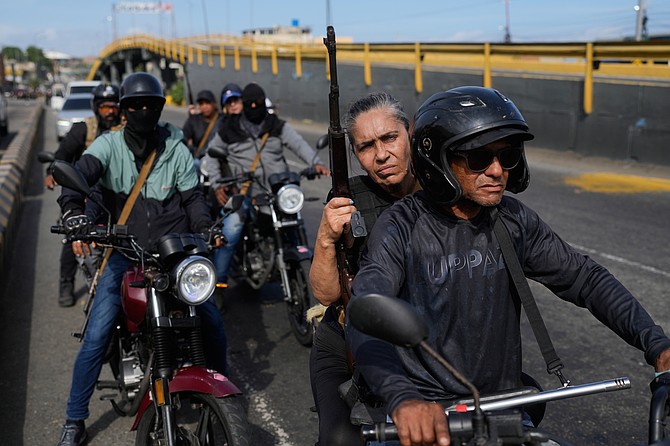
The Bahamian government has formally cautioned its citizens against all travel to Venezuela in the wake of a controversial U.S. military operation that resulted in the capture of Venezuelan President Nicolás Maduro and his wife. This development has triggered significant international repercussions throughout the Caribbean region.
In an official statement, The Bahamas Ministry of Foreign Affairs aligned itself with the Caribbean Community (CARICOM) position, emphasizing the critical importance of adhering to established international legal frameworks. The government specifically referenced security concerns as the primary motivation behind its travel advisory, urging Bahamian nationals to avoid Venezuela entirely during the current period of instability.
The extraordinary operation saw U.S. forces detain President Maduro and First Lady Cilia Flores at their Caracas residence, subsequently transporting them to the United States to face federal charges. While President Donald Trump initially suggested the U.S. would administer Venezuela during a transitional period, Secretary of State Marco Rubio later clarified that American involvement would primarily focus on enforcing existing oil sanctions rather than direct governance.
CARICOM’s unified statement, endorsed by The Bahamas, reaffirmed the region’s steadfast commitment to fundamental principles of international law, national sovereignty, and territorial integrity as enshrined in the UN Charter. The regional body emphasized diplomatic solutions, reiterating calls for peaceful dialogue to restore stability, democratic governance, and prosperity for the Venezuelan people.
The geopolitical shockwaves have manifested practically across the Caribbean, with Barbados reporting flight disruptions attributable to the military intervention. However, Bahamian authorities confirmed that Lynden Pindling International Airport operations remained unaffected. Aviation and tourism executive Robert Sands noted that travel impacts appeared concentrated in southern Caribbean nations, with services largely returning to normalcy following initial disruptions.