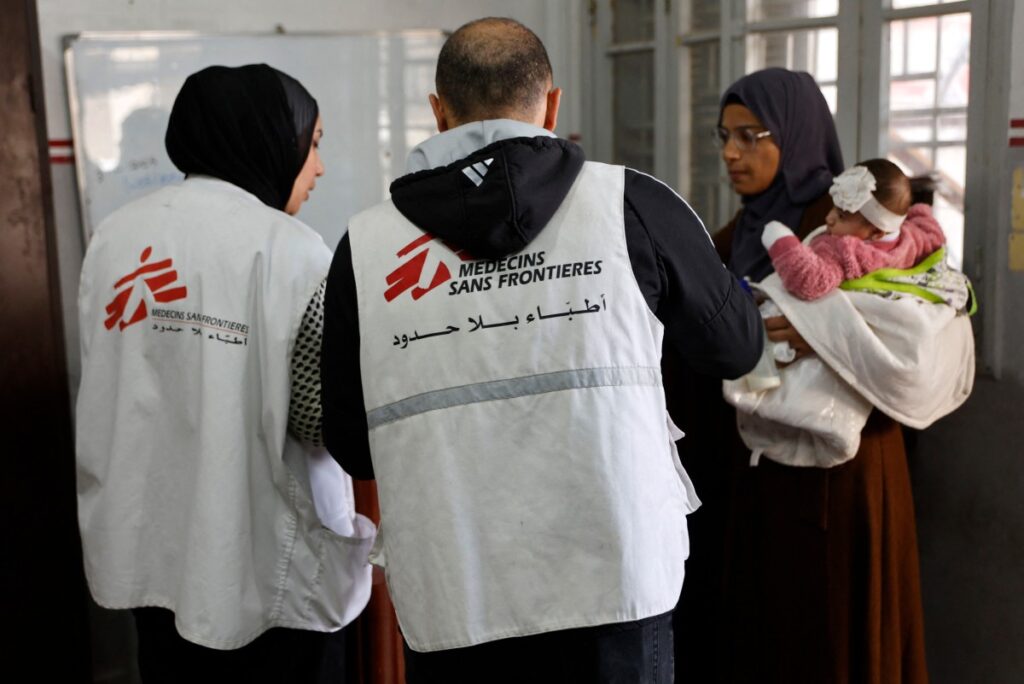
JERUSALEM (AFP)—A significant humanitarian confrontation is escalating as Israel prepares to implement a ban on 37 international aid organizations operating in Gaza, effective Thursday. The controversial measure requires organizations to submit comprehensive details about their Palestinian staff members—a demand that has drawn sharp criticism from United Nations officials and European Union leadership.
The policy, which sets a midnight Wednesday deadline for compliance, has been defended by Israeli authorities as necessary for security purposes. Gilad Zwick, spokesman for the Ministry of Diaspora Affairs and Combating Antisemitism, stated that the organizations had failed to meet new regulatory requirements over ten months. “They refuse to provide lists of their Palestinian employees because they know, just as we know, that some of them are involved in terrorism or linked to Hamas,” Zwick told AFP.
Humanitarian groups including Doctors Without Borders (MSF), Norwegian Refugee Council, World Vision International, CARE, and Oxfam face operational suspension. These organizations warn that the ban will severely impact already insufficient food and medical shipments to Gaza’s 2.2 million residents, where 1.3 million people require urgent shelter support according to international assessments.
The United Nations human rights chief Volker Turk condemned the move as “outrageous,” while EU humanitarian chief Hadja Lahbib declared the NGO registration law “cannot be implemented in its current form.” UNRWA commissioner Philippe Lazzarini warned the policy sets a “dangerous precedent” that undermines fundamental humanitarian principles.
Israel’s ambassador to Belgium and Luxembourg, Idit Rosenzweig-Abu, reported that 104 organizations had filed under the new guidelines, with nine rejected and 37 failing to complete procedures. The Israeli government maintains the process is designed to prevent exploitation of aid by Hamas, which still controls parts of Gaza.
The controversy unfolds against the backdrop of a fragile ceasefire following October’s deadly conflict, with aid groups reporting only 100-300 daily aid trucks reaching Gaza despite agreements stipulating 600 trucks per day.