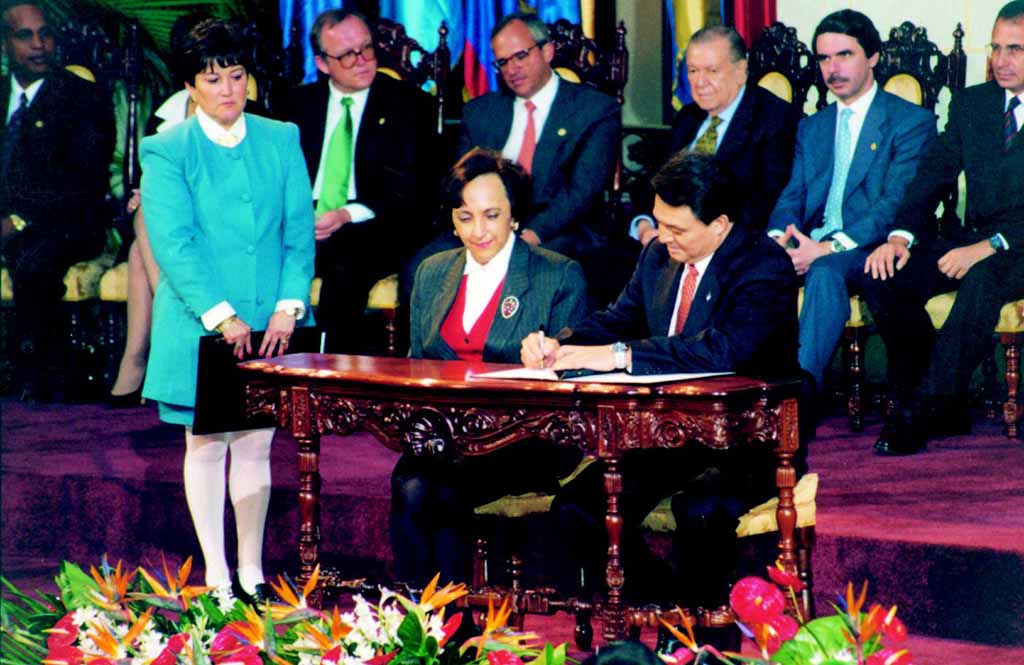
A solemn ceremony took place at Guatemala’s National Palace of Culture, overlooking the Plaza de la Constitucion, marking the anniversary of the nation’s landmark peace agreement. The event gathered ten national leaders alongside two thousand distinguished guests and delegates representing diverse societal sectors.
The historical significance was palpable as attendees recalled December 29, 1996, when four commanders of the Guatemalan National Revolutionary Unity (URNG) – Rolando Morán, Pablo Monsanto, Carlos González, and Jorge Rosal – formally signed the peace accord. The signing occurred in the Executive Branch headquarters with then-President Álvaro Arzú (1996-2000) serving as honorary witness to this transformative moment.
The diplomatic achievement was further validated by signatures from four members of the Peace Commission and former United Nations Secretary-General Boutros Boutros-Ghali, whose involvement underscored the international community’s investment in Guatemala’s peaceful transition.
Outside the palace walls, thousands of citizens had gathered twenty-eight years earlier, awaiting official proclamation of the conflict’s termination with aspirations for improved livelihoods. Their presence symbolized the collective yearning for reconciliation after thirty-six years of internal strife.
Contemporary organizations, including the National Platform of Victims of the Internal Armed Conflict (1960-1996), used the anniversary to advocate for reactivating peace initiatives and restoring judicial integrity. Their calls emphasize the ongoing relevance of the peace agenda in addressing historical grievances.
The devastating human cost of the civil war remains embedded in national consciousness, with official statistics documenting over 200,000 fatalities and 45,000 disappeared persons—figures that continue to shape Guatemala’s pursuit of transitional justice and social healing.