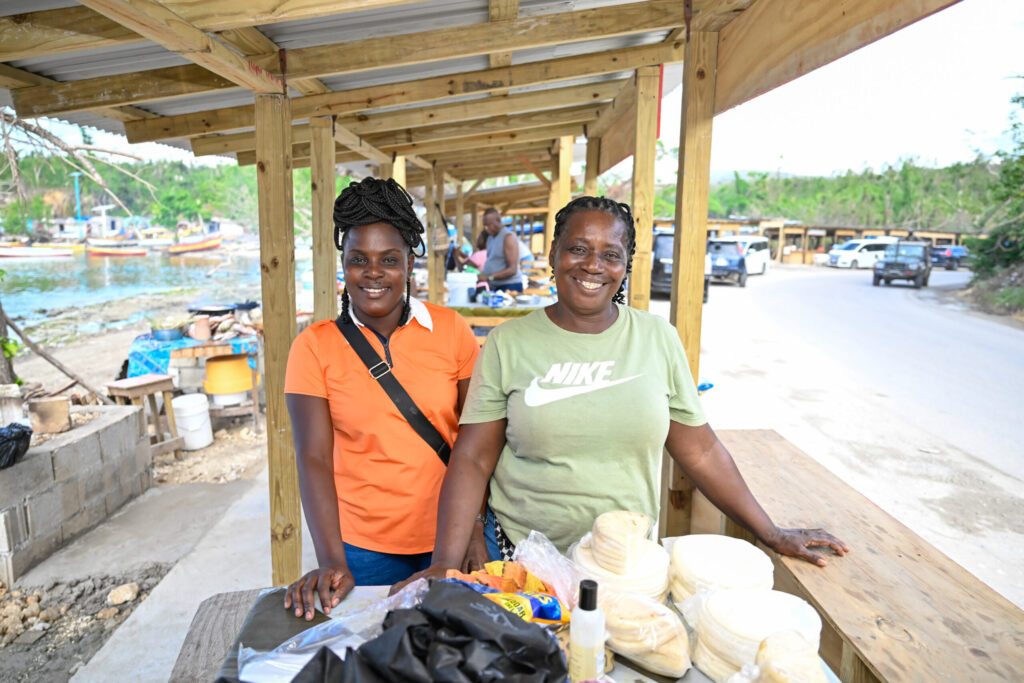
KINGSTON, Jamaica — Economic activity is rebounding at the renowned Border food stop following the Jamaican government’s reconstruction initiative that replaced vendor stalls destroyed by Hurricane Melissa. The popular roadside culinary destination, situated on the boundary between St. Elizabeth and Westmoreland parishes, has regained its vibrancy as vendors return to serving local specialties including fried fish, bammy (cassava flatbread), and festival (sweet fried dough).
The restoration project, funded through a $20-million cabinet allocation, represents a critical component of a broader support program for micro, small, and medium-sized enterprises (MSMEs) in regions severely affected by the October 28 category-five hurricane. The intervention has reconstructed a cluster of 44 commercial stalls with enhanced structural resilience.
For long-term vendor Nadine Brown, whose enterprise at Border spans over three decades, the government’s initiative has provided a crucial economic lifeline. Brown recounted to JIS News the extensive damage suffered by both her business and residential property during the hurricane. “My experience was profoundly difficult. I lost three doors at my house, my television, and significant water intrusion occurred,” she recalled, noting that the storm removed the upper-level roofing and forced her family to occupy only the ground floor.
Despite substantial personal losses, Brown has resumed selling her signature bammy and reports steadily improving sales. She expressed profound appreciation for the governmental support: “We genuinely appreciate what they’re doing. It feels encouraging and has been instrumental for all of us.”
Fellow vendor Opal Wedderburn, a relative newcomer with approximately two years at Border who sought financial independence through self-employment, faced even more severe personal circumstances. The mother of three described becoming homeless after the hurricane destroyed her family residence, compelling them to relocate into a one-bedroom structure built by her uncle that now accommodates herself, her father, and her children.
“The situation was catastrophic. We were inside our home when the storm hit us severely, forcing us to evacuate during its peak. We lost everything,” Wedderburn lamented. She similarly conveyed gratitude for the stall reconstruction, explaining that her bammy sales now constitute the primary means to support her family and fund reconstruction supplies including cement and steel for their home.
“Regardless of circumstances, persistence is essential. I returned to work because children bring responsibilities that necessitate moving forward,” Wedderburn emphasized.
Both vendors acknowledge a modified holiday season this year but confirm that the rebuilt stalls establish a foundational platform for recovery. The new structures incorporate improved engineering features including concrete embedding for stability and hurricane straps to secure roofs during extreme weather events.
Senator Aubyn Hill, Minister of Industry, Investment and Commerce, detailed additional protective measures being implemented against flooding risks. The minister highlighted that the stall reconstructions have reactivated the broader local economic ecosystem, benefiting not only food vendors but also the fisherfolk and agricultural producers who supply them with fresh ingredients.
With cabinet approval of an additional $42 million in funding, Minister Hill has designated MSMEs in Middle Quarters, St. Elizabeth, as the next beneficiaries of ongoing restoration efforts.