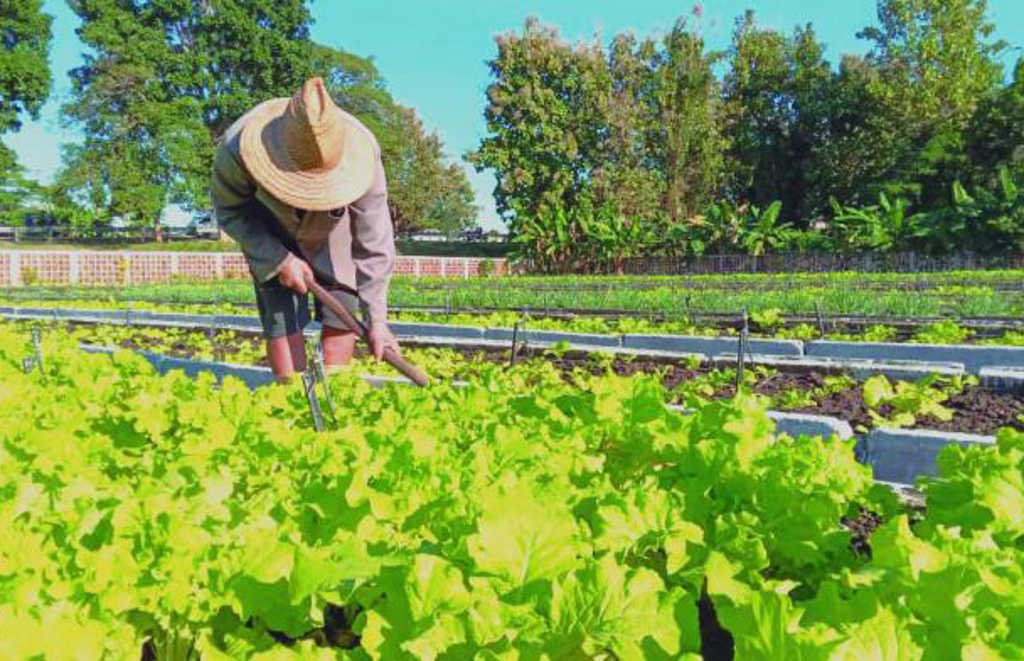
In a significant development for Cuba’s food security initiatives, the Provincial Delegation of Agriculture has reported substantial progress in its urban agriculture program. The comprehensive initiative now encompasses 1,244 productive structures spanning 1,278 hectares across diverse cultivation formats including organoponic systems, technified plots, intensive orchards, and traditional agricultural fields.
Lerida Maria Sanchez, the program coordinator in Vueltabajo, revealed remarkable productivity metrics, stating that the 2025 harvest achieved an average yield of 10.2 kilograms per square meter. This impressive output demonstrates the program’s effectiveness despite ongoing material constraints and resource limitations that have historically challenged Cuban agriculture.
The initiative has simultaneously expanded its reach to household-level food production, with 5,000 new family courtyards added recently, bringing the total to 65,000 participating households. This decentralized approach contributes significantly to family and community self-sufficiency while reducing pressure on centralized food distribution systems.
International partnerships have played a crucial role in enhancing the program’s capabilities. Through various collaboration projects, the agriculture initiative has received solar-powered irrigation systems, diverse seed varieties, equipment for producing preserved foods and condiments, and even a tricycle for improved local marketing and distribution within neighboring communities.
Now in its thirty-eighth year of operation, Cuba’s urban agriculture program faces the dual challenge of surpassing its own established benchmarks while meeting the growing demands of the population. The program continues to evolve as a strategic alternative for national food security, demonstrating innovative approaches to sustainable agriculture in urban environments.