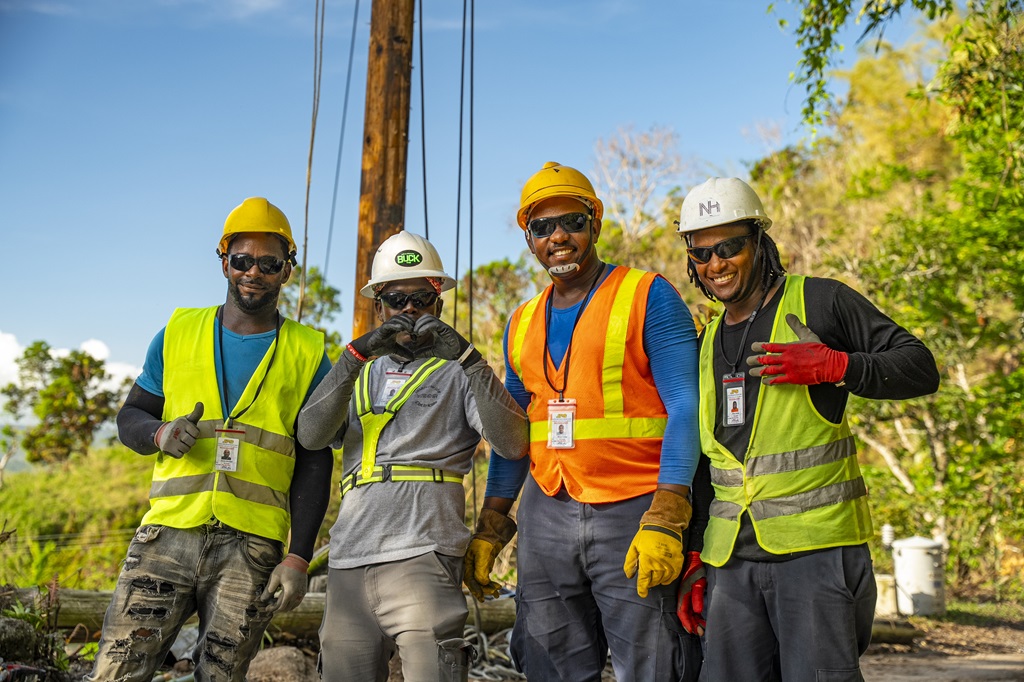
In an unprecedented demonstration of regional cooperation, Jamaica’s national power grid is rapidly recovering from the devastation of Category 5 Hurricane Melissa through a massive multinational assistance effort coordinated by the Caribbean Electric Utility Services Corporation (CARILEC).
The catastrophic storm, which struck with historic intensity, initially left 540,000 customers (77% of JPS’s client base) without electricity. Through the coordinated efforts of the CARILEC Disaster Assistance Programme (CDAP), power restoration has progressed dramatically, with only 16% of customers remaining without electricity as of December 17.
JPS President and CEO Hugh Grant emphasized that “the significant progress we have made with restoration is a direct result of the collaboration and partnerships that have defined the approach to restoration after Hurricane Melissa.” The regional mutual-aid initiative has deployed over 170 skilled line workers from 18 Caribbean utilities and private contractors across the region.
The assistance program represents one of the largest coordinated disaster responses in Caribbean energy history. Crews from Anguilla Electricity Company, Antigua Public Utilities Authority, Barbados Light and Power, Bahamas Power and Light, and numerous other utilities have been working alongside JPS teams to rebuild extensively damaged transmission and distribution infrastructure.
CARILEC Chairman Wayne Caines explained the philosophical foundation behind the effort: “Hurricane Melissa reminds us that when something happens to any one of our partners, it affects us all. CARILEC exists so that no member faces that challenge alone.” He praised JPS’s restoration strategy as “best in class” and committed that CARILEC would remain engaged “until every household that can safely be reconnected has electricity again.”
The CDAP program, funded through annual contributions from 27 member utilities and support from international donor organizations including the UK Foreign, Commonwealth and Development Office and the German Agency for International Cooperation, represents a model of regional preparedness for increasingly severe weather events exacerbated by climate change.
The successful implementation of this regional cooperation framework demonstrates how Caribbean nations are developing innovative solutions to build energy resilience and accelerate recovery from natural disasters that frequently impact the region.