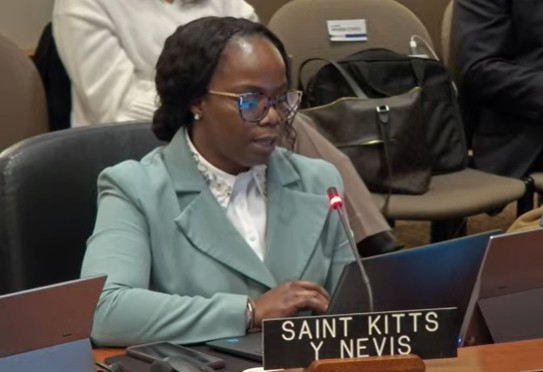
WASHINGTON, DC – In a significant demonstration of its dedication to disability rights, St. Kitts and Nevis has formally reaffirmed its commitment to creating inclusive societies during a recent address to the Organization of American States (OAS) Permanent Council. The Federation’s representatives outlined comprehensive domestic initiatives aligned with international disability conventions.
Third Secretary and Alternate Representative Adelcia Connor-Ferlance articulated the nation’s position that democratic societies reach their fullest potential when all citizens can participate equally in civic, economic, and social spheres. This philosophy particularly extends to vulnerable populations, including persons with disabilities, whose complete inclusion represents both a democratic necessity and a development priority.
The Federation’s accession to the Inter-American Convention on the Elimination of All Forms of Discrimination against Persons with Disabilities signifies its sustained commitment to promoting equality, protecting human dignity, and eliminating institutional barriers. These efforts are further guided by principles established in the United Nations Convention on the Rights of Persons with Disabilities.
Substantive progress is underway domestically, with the government currently modernizing its disabilities policy and finalizing comprehensive disabilities legislation. These legislative advancements will firmly embed disability rights within the national governance framework.
Collaborative efforts between the Ministry of Youth Empowerment, Ageing, and Disabilities and the St. Kitts & Nevis Association of Persons with Disabilities have generated increased public awareness through sensitization workshops, stakeholder consultations, and community outreach programs. The government has implemented practical measures including sign language training for frontline workers and civil servants to enhance communication accessibility.
Economic inclusion initiatives have also been launched within the agricultural sector, designed to develop economic skills and promote self-reliance among persons with disabilities. These programs complement existing handicraft initiatives, creating multiple pathways for social inclusion, entrepreneurship, and independent livelihoods.