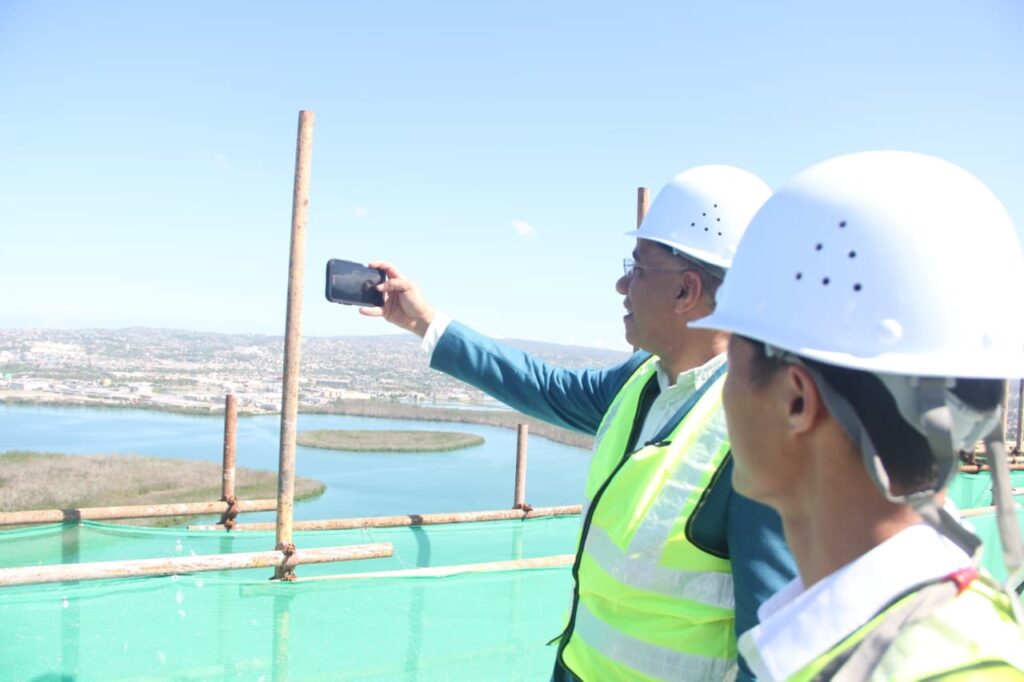
ST JAMES, Jamaica — Prime Minister Andrew Holness has articulated a compelling vision for Jamaica’s developmental trajectory, emphasizing the critical importance of preserving national identity while pursuing economic progress. During a keynote address at the topping out ceremony for Tower One of the Pinnacle Development, the leader articulated a philosophy of balanced modernization that safeguards Jamaica’s distinctive character.
Prime Minister Holness presented a nuanced perspective on tourism-driven development, arguing that Jamaica’s global appeal stems from its authentic cultural and environmental assets rather than replicated urban landscapes. “The objective isn’t to recreate Manhattan in the Caribbean,” Holness stated emphatically. “Visitors seek genuine Jamaican experiences—they want to encounter the unique qualities that distinguish our nation from any other destination.”
The Prime Minister’s comments arrive amid significant infrastructure transformation, with large-scale projects like the Pinnacle Towers reshaping Jamaica’s urban fabric. While enthusiastically endorsing architectural modernization and future-proofed construction, Holness simultaneously issued a powerful call to conserve the nation’s essential character. “We must advance our built environment while retaining the natural and cultural assets that define us,” he declared.
Environmental sustainability emerged as a crucial component of this balanced approach. Holness revealed extensive consultations with the National Environment and Planning Agency (NEPA) to ensure that developments like Pinnacle adhere to rigorous ecological standards. “Montego Bay’s mystique derives not from skyscrapers but from sun, sea, and sand,” he observed, acknowledging the project’s proximity to sensitive mangrove ecosystems and fishing habitats.
In a striking extension of his identity preservation argument, Holness identified specific cultural practices requiring transformation. He criticized the visual disorder of poorly maintained properties and streetscapes, labeling haphazard development patterns as “chaka-chaka”—a local expression for disorganization. “Tourism demands certain standards of orderliness and aesthetic coherence,” he noted, urging property owners to maintain attractive facades that collectively enhance Jamaica’s appeal.
The Prime Minister praised the LCH development group for achieving this balance at the Pinnacle project, highlighting their success in creating modern infrastructure that simultaneously respects Jamaican environmental and cultural priorities. His address ultimately framed national development as a sophisticated negotiation between progress and preservation, modernity and identity.