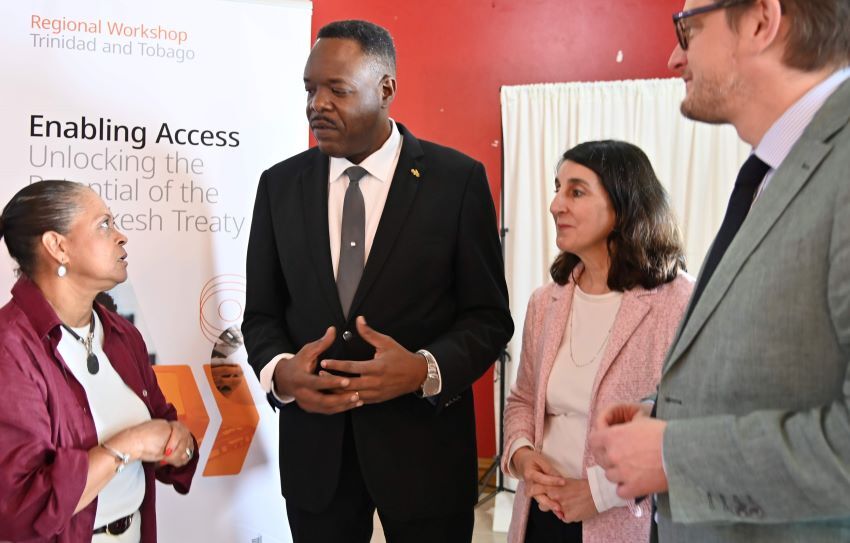
In a significant move toward educational inclusivity, Caribbean Examinations Council (CXC) CEO Dr. Wayne Wesley has announced sweeping reforms requiring all educational publishers to produce materials in accessible formats compliant with the Marrakesh Treaty. The declaration came during a World Intellectual Property Organization workshop in Port of Spain, where Wesley addressed intellectual property experts, visually impaired community members, and library directors.
The policy transformation will embed accessibility requirements into all publisher contracts, mandating braille, large print, and digitally accessible formats compatible with assistive technologies. Wesley emphasized that authorship selection will now prioritize creators who demonstrate explicit support for the Marrakesh Treaty provisions when prescribing texts for CXC syllabi.
Statistical evidence underscores the urgency: Recent regional studies reveal over 0.1% of Caribbean children aged 5-16 experience blindness, with up to 0.3% having low vision. Specific national data shows 2.4% of Barbadian children under 18 live with visual impairment, while 64% of Trinidadian high school students have refractive errors requiring visual aids. Hearing impairment affects 4.9% of Jamaican students according to local research.
The growing need is reflected in examination participation rates, with Special Arrangement Assessment requests increasing from 3,271 in 2024 to 3,444 across CAPE, CSEC, and CCSLC examinations scheduled for 2025.
CXC’s multidimensional strategy includes advocacy campaigns urging Caribbean governments to formally adopt the Marrakesh Treaty, alongside comprehensive training programs for secondary educators. These initiatives will equip teachers with specialized knowledge and tools to support visually impaired and print-disabled learners effectively.
Dr. Wesley framed accessible educational materials as both a moral imperative and strategic investment in human potential, concluding that ‘unlocking the full promise of the Marrakesh Treaty will empower all learners to read, learn, and thrive regardless of physical limitations.’