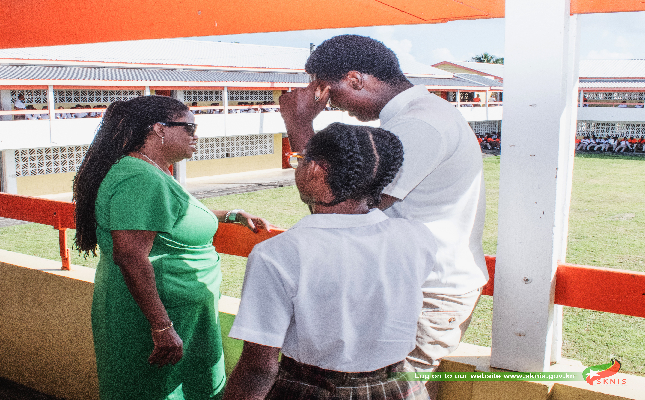
In a powerful address at Washington Archibald High School’s final assembly of 2025, renowned disability rights advocate Kerryann Ifill delivered a transformative message challenging students to reconsider their perceptions of persons with disabilities. The December 1st session, coordinated by the Ministry of Youth Empowerment, Ageing, and Disabilities, coincided with the International Day of Persons with Disabilities observed annually on December 3rd.
Ms. Ifill, a Barbadian disability consultant who lost her sight at age five, shared her remarkable journey of overcoming societal barriers to achieve academic and political excellence. Having graduated from the University of the West Indies, served as President of the Barbados Senate, and contributed to rewriting her nation’s constitution, she embodied the message that disability does not define capability.
“People with disabilities are simply people,” Ifill asserted during her presentation. “They possess the same needs, interests, desires, and opportunities as anyone else—when given the chance.” She detailed her accomplishments as a teacher, conference speaker, and legislator, emphasizing that blindness never prevented her from achieving these milestones.
The disability consultant provided practical guidance on appropriate interaction with individuals experiencing various disabilities, including vision, hearing, and speech impairments, plus those with physical, neurological, or psychosocial disabilities. She specifically encouraged rejecting stereotypes and avoiding discriminatory behaviors.
Illustrating her point with a personal anecdote, Ifill described independently operating a sophisticated coffeemaker at her hotel, demonstrating the competence and self-reliance many disabled individuals develop. Her philosophy of perseverance resonated throughout the assembly: “When I am told I can’t, I prove people wrong and show them that I can.”
Ifill concluded with a sobering statistic that captured the audience’s attention: approximately 15 percent of those present would experience disability during their lifetime. This reality, she emphasized, makes inclusive attitudes and accessibility concerns relevant to everyone.
The presentation represented part of ongoing efforts by St. Kitts and Nevis to promote disability awareness and foster more inclusive communities through educational initiatives.